
Restorative & cosmetic
Dental implants, your third set of teeth.
After you have lost your natural ones. Over 1,000 placed in twenty years, and 95% success at ten years and beyond.
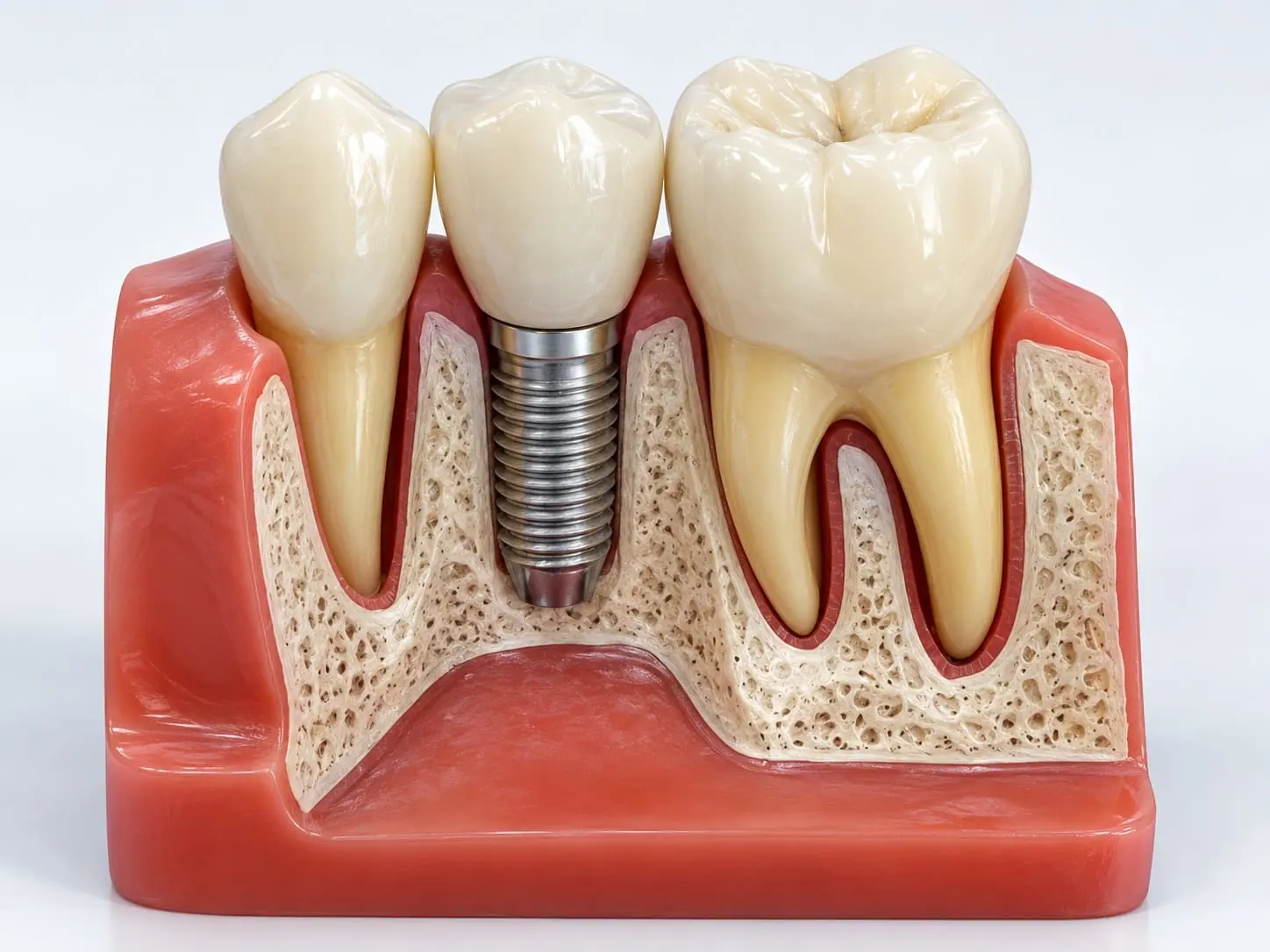 Where it should be
Implant with a crown, from
PKR 170,000
With a PFM crown; PKR 230,000 with zirconia. Nothing is placed on the first visit: that appointment is the examination, the scan and the plan.
1,000+
Implants placed over twenty years, across five named systems.
95%
Success at ten years and beyond, when the work is planned and placed with care.
12 weeks
The minimum for an implant to integrate with the bone before the tooth goes on.
The Modern Dental Implant Protocol
Everything is planned, and nothing is placed blindly.
Under that protocol the implant is placed according to where the future tooth will be, rather than where the bone is. The surgical planning is restorative-driven, dictated by the position of the future teeth rather than blindly estimated.
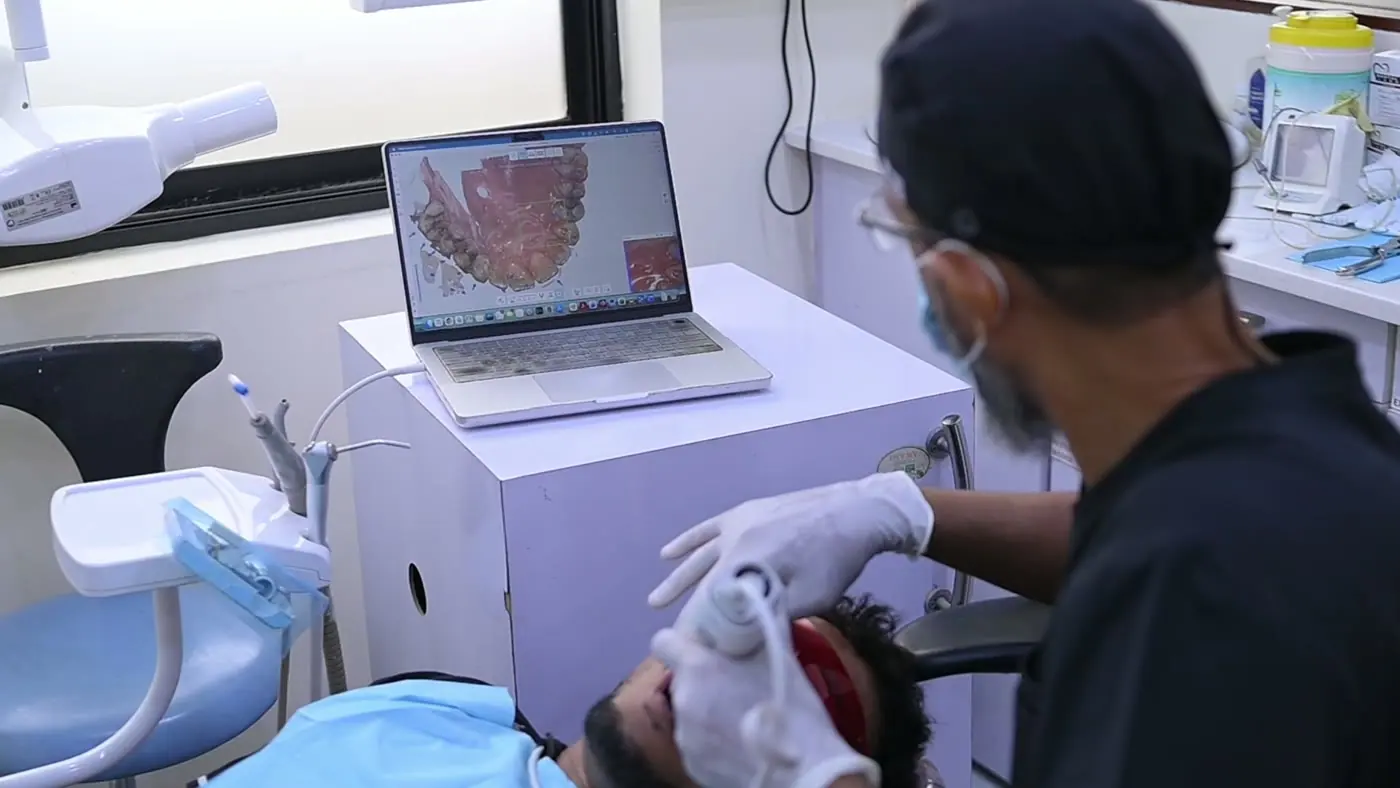
Nothing on the first visit
An implant is never placed blindly at the initial consultation. The first appointment is history, examination, blood reports and a 3D scan.
Where the tooth belongs
The implant goes where the future tooth will be, not where the bone happens to be. A surgical guide is made before any surgery.
Compromise, controlled
Where placing it exactly there is not fully possible, the compromise is factored into the plan rather than discovered during surgery.
Twelve weeks, and none of them optional.
Drawn roughly to scale, so the shape of the three months is visible. Week one and month one sit close together; month three sits a long way out, which is the point.
- Visit one
Consultation, and nothing placed
History, examination, blood reports and a 3D scan of the jaw to study the quantity and quality of bone.
Step 1 of 6 - Before surgery
A surgical guide is fabricated
So the implant is placed by where the future tooth belongs, not by where the bone happens to be.
Step 2 of 6 - Surgery day
Placement, with the first 72 hours managed
An intramuscular combination of painkillers reduces the incidence of pain and swelling over the first three days.
Step 3 of 6 - Week 1
First follow-up
To assess soft tissue healing.
Step 4 of 6 - Month 1
Second follow-up
Hard and soft tissue together.
Step 5 of 6 - Month 3
Impression, then the crown
Second-stage impression at three months, and the crown fitted a week to ten days later.
Step 6 of 6
Whether it suits you
A good candidate, and three things that count against it.
All three are relative, not absolute. Each is stated with the reason it matters.
A medically healthy person who can keep their mouth clean, understands the importance of oral hygiene, and has good quality and quantity of bone where the implant is needed.
Uncontrolled diabetes
Where the chance of failure is extremely high.
Gum disease
“If periodontitis has loosened your natural teeth, imagine how quickly it will fail an implant if the gum disease is not treated first.” So it is treated first.
Bisphosphonate medication
Not osteoporosis itself, but the medication, which stops bone metabolism altogether. An implant depends on new bone forming around it, so if bone cannot form, it will fail.
A socket is oval. An implant is round.
A graft is particularly needed where an implant is planned after the extraction of a tooth: a tooth socket is oval and an implant is round, so there is a gap. That gap is filled with a bone graft and covered by a membrane. Soft tissue heals faster than bone, so it has to be kept out.
“It is important to let the bone win its race.”
After it is placed
What you do, and what is in you.
- 01
First 72 hours
An intramuscular combination of painkillers is given to reduce the incidence of pain and swelling in the first three days.
- 02
First two weeks
No brushing and no eating from that side for at least two weeks, while the initial healing happens.
- 03
A possible third week
Decided from the condition of your tissue, not from a calendar.
Across more than twenty years and over a thousand procedures.
Monday-Thursday & Saturday · 4:00-8:00 PM
Three prices, and what changes between them.
Given in writing before anything starts. Instalments can be arranged for implant patients.
- Implant with a PFM crownThe standard implant and crown.
- PKR 170,000
- Implant with a zirconia crownNothing metal underneath, so no grey line at the gum.
- PKR 230,000
- Bone grafting, where it is neededDetermined by clinical examination and the 3D scan, and sometimes at the time of surgery.
- PKR 70,000
Common questions
Twelve questions, in three groups.
Asked most often
Am I a candidate for dental implants?
A good candidate is medically healthy, can keep their mouth clean, understands why oral hygiene matters, and has enough good-quality bone where the implant is needed. Three conditions count against it. Uncontrolled diabetes makes failure extremely likely. Gum disease loosens natural teeth, and if it has done that it will fail an implant faster still, so it is treated first. And osteoporosis is not itself a bar, but the bisphosphonate medicines used to treat it stop bone turnover altogether, an implant succeeds because new bone forms around it, so if bone cannot form, it will fail.
01How long does the whole procedure take, and why so long?
It takes at least twelve weeks, or three months, for an implant to integrate with the bone. That is the time the bone needs to grow around the threads and anchor it firmly. After that the implant is ready for the impression and the tooth.
02How many implants do I need?
Ideally one implant for each missing tooth. Exceptions can be made on a case-by-case basis.
03Why do I need a bone graft?
The need is determined by clinical examination and the 3D scan. A graft is particularly needed where an implant is planned after the extraction of a tooth: a tooth socket is oval and an implant is round, so there is a gap. That gap is filled with a bone graft and covered by a membrane. Soft tissue heals faster than bone, so it has to be kept out, it is important to let the bone win its race.
04What are the precautions afterwards, and when can I eat on that side?
The initial healing takes two weeks, so no brushing and no eating from that side for at least two weeks. We will decide from the condition of your tissue whether a third week is needed.
05How successful are dental implants?
Practised with all caution, immaculate planning and precision, they are extremely successful, 95% at ten years and beyond.
06Can you get dental implants with bone loss?
Mild to moderate bone loss can be handled with guided bone regeneration, and in the upper jaw with a sinus lift where that is indicated.
07How much do dental implants cost in Karachi?
An implant with a PFM crown is PKR 170,000. With a zirconia crown it is PKR 230,000. Bone grafting, where it is needed, is PKR 70,000.
08How long do dental implants last?
The success rate is 95% at ten years and beyond, when the work is planned and placed with care.
09Which implant system do you use?
Several of the leading systems, over more than twenty years and more than a thousand placements.
10Will my implant be placed on the day I come in?
No, and deliberately not. Under the Modern Dental Implant Protocol everything is planned and an implant is never placed blindly at the first consultation. Implants are positioned according to where the future tooth needs to be rather than where the bone happens to be, that means history, an oral and X-ray examination, blood reports, a 3D scan of the jaw, and a surgical guide made before any surgery.
11Why is a bone graft needed when an implant goes in after an extraction?
Because the socket the tooth came out of and the implant are not the same shape, a tooth root is usually oval and an implant is round. The gap around the implant is filled with a bone graft and covered with a membrane that keeps soft tissue out of the healing bone. Soft tissue heals faster than bone, so it has to be held back and the bone allowed to win its race. Without the graft, soft tissue fills the gap, the implant does not integrate, and it fails.
Nothing is placed on the first visit.
Bring any current dental X-ray, 3D scan and medical report with you. The first appointment is the examination, the scan and the plan, not the surgery.
Instalments can be arranged, especially for implant patients. Monday-Thursday & Saturday · 4:00-8:00 PM. Office 101, First Floor, Plot 21-C/5, Al Murtaza Commercial Area, DHA Phase 8, Karachi 75500.
Elsewhere
Where else his work shows up.
Workshops, talks, published work and the procedure videos, on the sites that carried them. Every link opens where it was published.
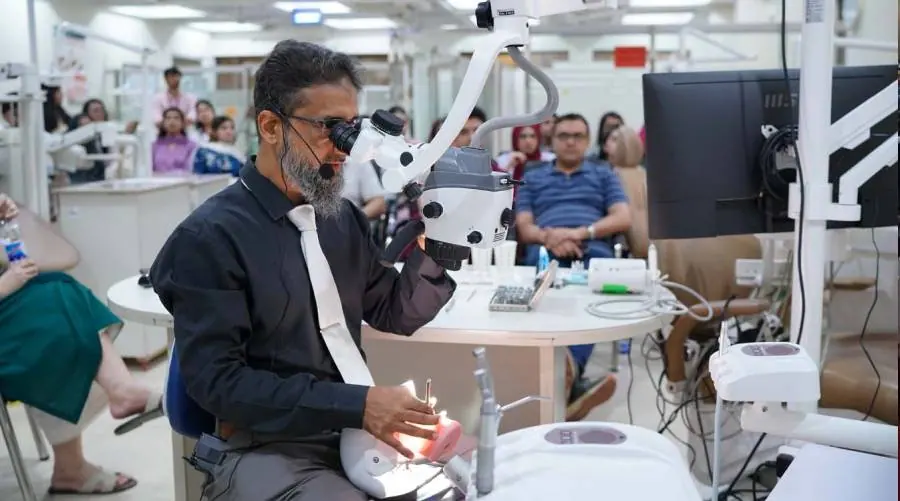 DentalNews.pk
Two-day workshop series on microscope-assisted endodontics, Lahore
Sept 2026
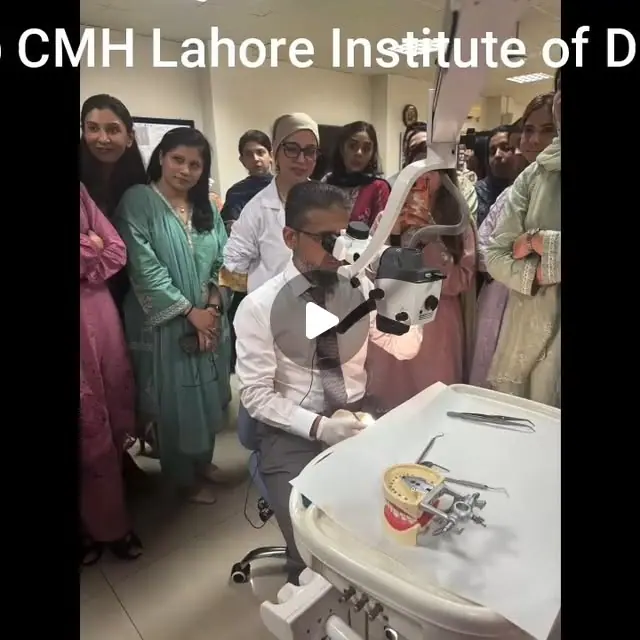 Instagram
Procedure videos and cases, in short form
Sept 2026
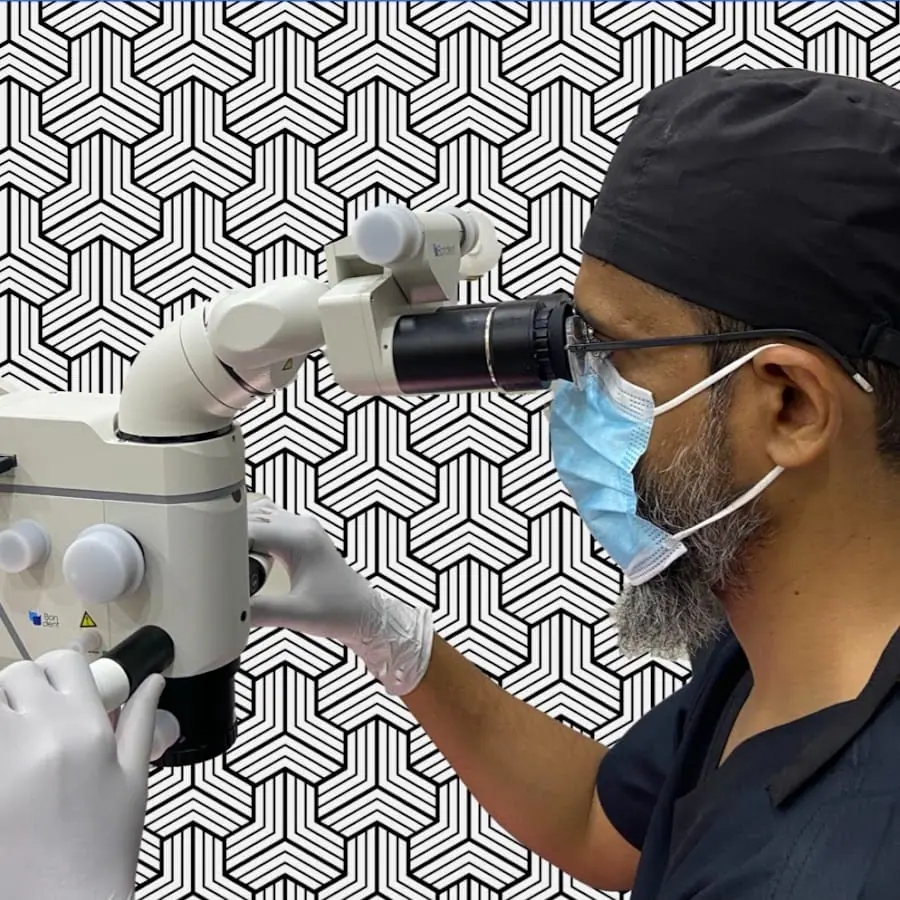 YouTube
26 procedure vlogs, with Urdu commentary
Jan 2026
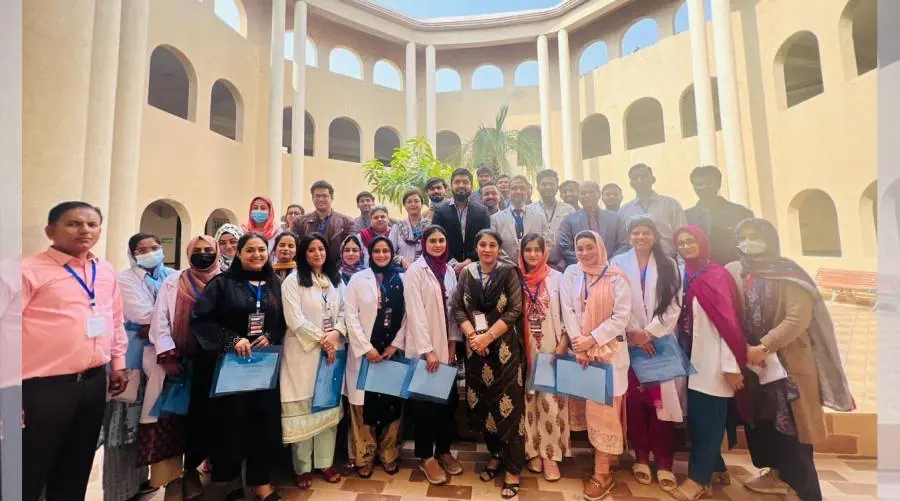 DentalNews.pk
Separated instrument retrieval workshop at LUMHS
Dec 2025
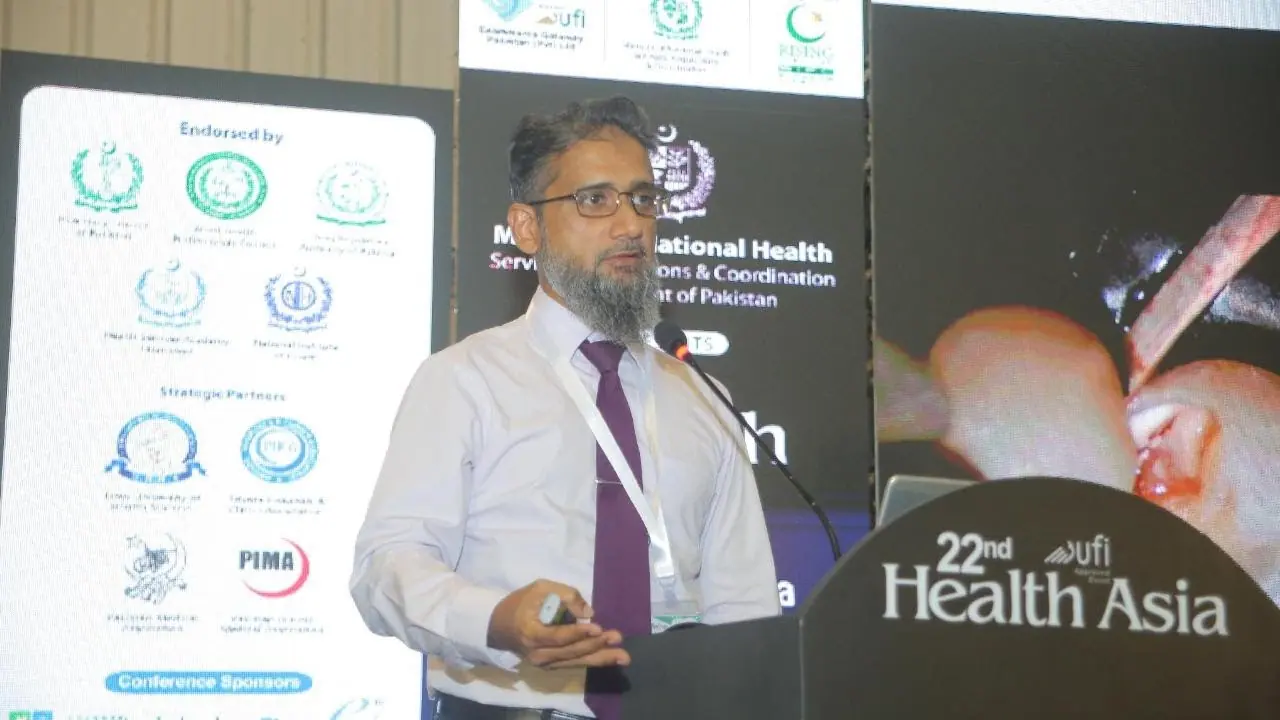 YouTube
Microscope Enhanced Restorative Dentistry, Dentech Asia, Karachi
Oct 2025
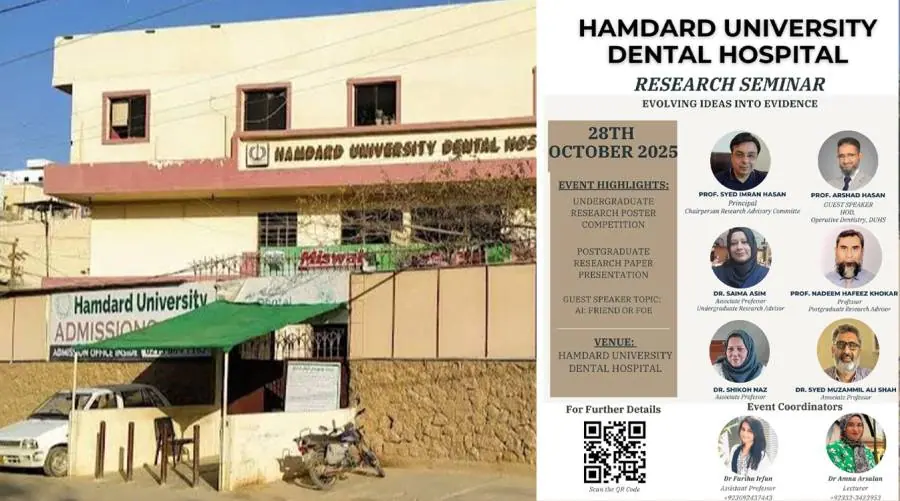 DentalNews.pk
Hamdard University Dental Hospital research seminar
Oct 2025
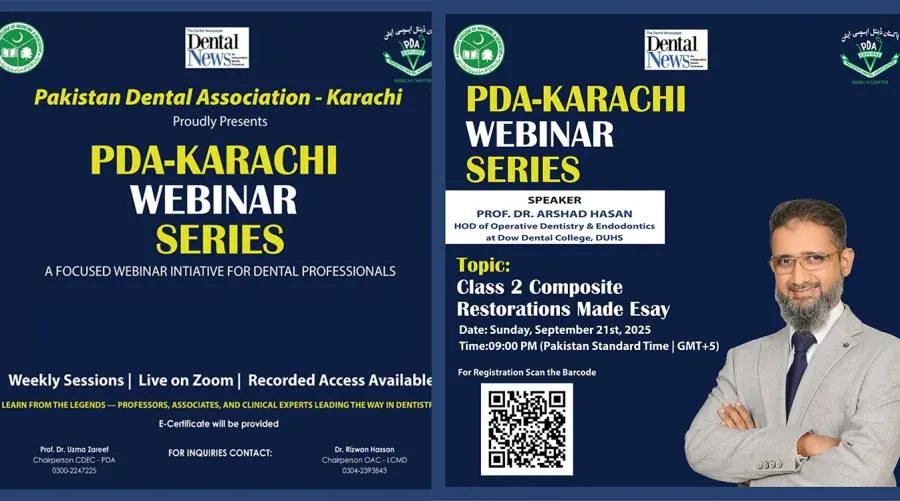 DentalNews.pk
PDA Karachi second webinar with Prof. Dr. Arshad Hasan
Sept 2025
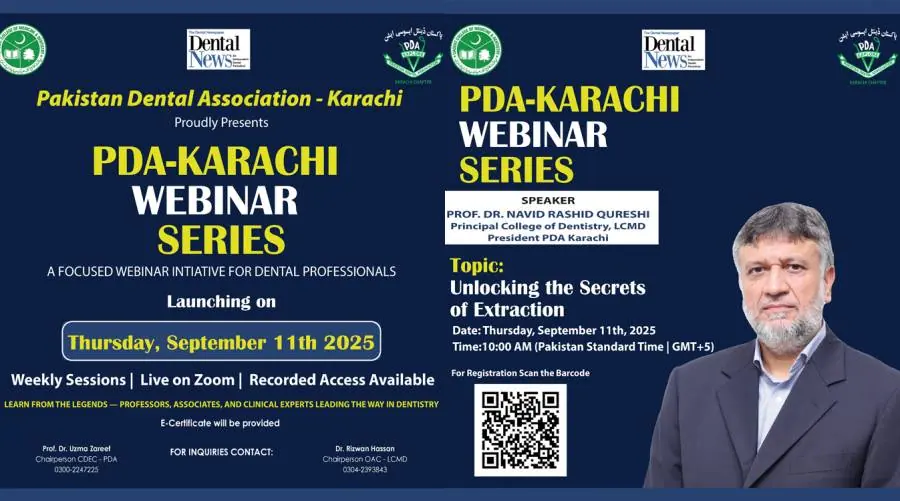 DentalNews.pk
PDA Karachi webinar series 2025
Sept 2025
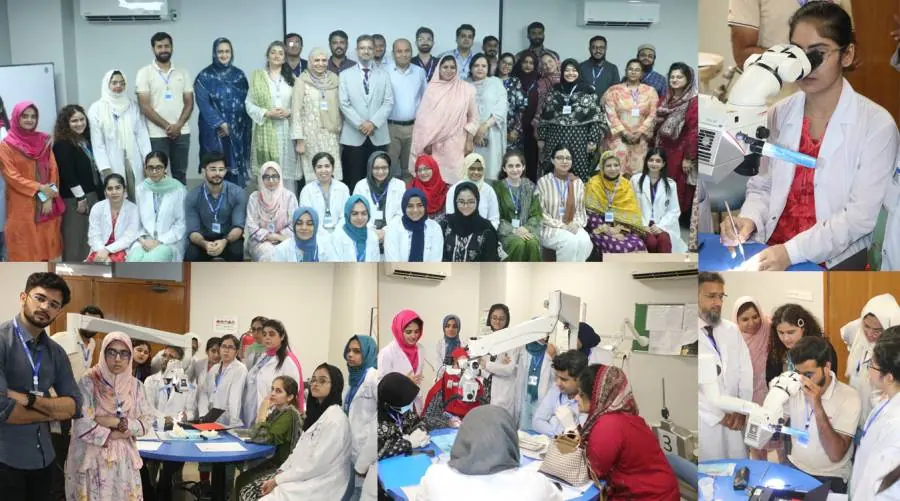 DentalNews.pk
Hands-on workshop at Dow Dental College on file removal
Jun 2025
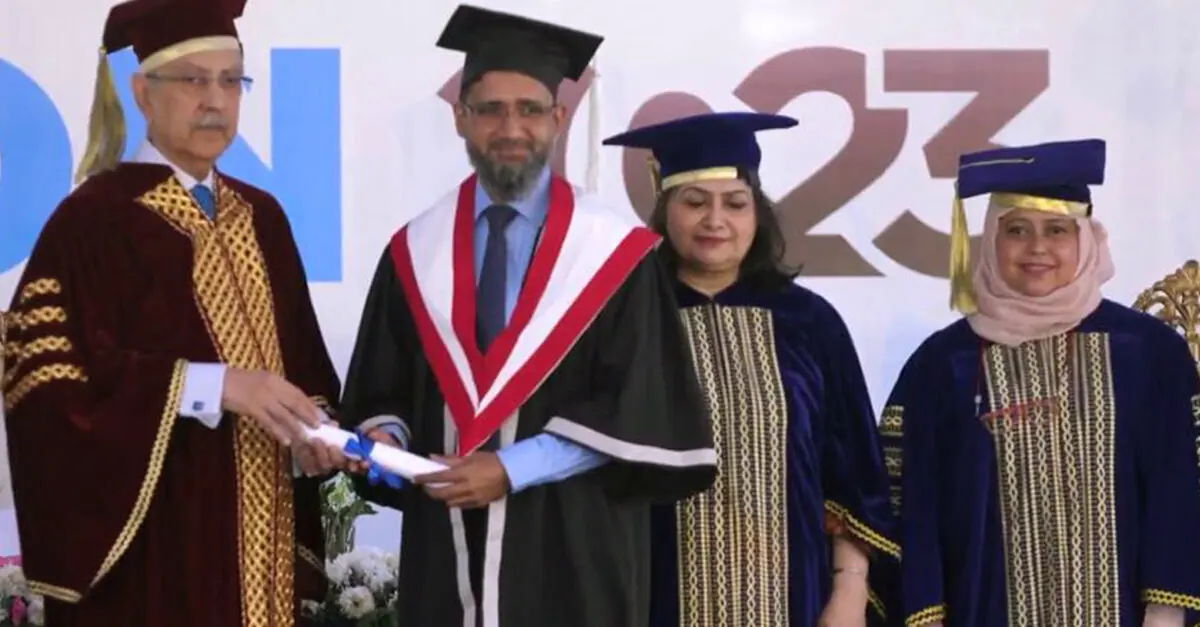 Dental Tribune
Prof. Dr. Arshad Hasan receives PhD in Operative Dentistry
Dec 2023