
Endodontics
Your last root canal failed. The tooth can usually still be saved.
Most re-treatments are finished over two visits, and 85 to 90% of them work.
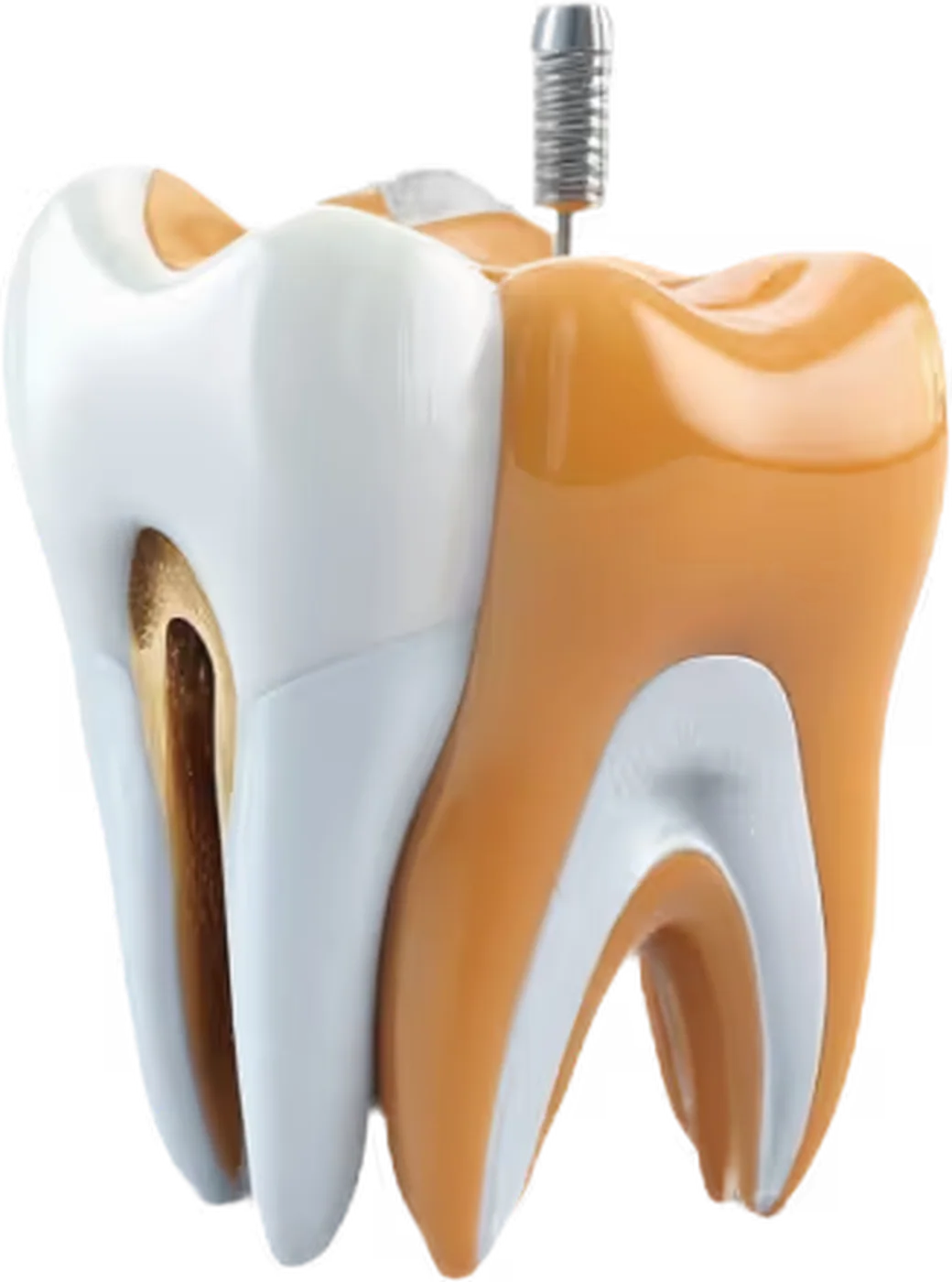 Opened up
Failed root canal re-treatment
PKR 55,000
Consultation and X-ray is PKR 3,500 before it. Bring whatever films you were given last time; an older film beside a new one is worth having in the room.
How you know
Four signs that the last one failed.
- 01
Pain on biting
The tooth hurts when you put load on it.
- 02
Swelling
Around the tooth or in the face beside it.
- 03
Pus discharge
From the gum beside the treated tooth.
- 04
Sudden severe pain
Out of nothing, often at night.
Any one of these is a reason to have the tooth looked at. Not all of them appear, and they do not always appear together.
What none of them tells you
Whether it can be saved
A symptom tells you that something is wrong. It does not tell you what, or whether the tooth can still be saved. That is decided at the examination, from the film and under magnification.
Monday-Thursday & Saturday · 4:00-8:00 PM
Whether yours can be
It can be saved if two things are true.
Both have to hold. The second one is the one that usually decides it.
There is enough tooth structure left.
Something has to be left to rebuild on once the old filling and the decay are out.
The full length of every canal can be reached.
The main cause of failure is the first dentist not filling the canal to its full length, and they may have blocked it in a way that means it cannot be reopened all the way. This one matters most.
One case, treated 2016
A lower right first molar, with a separated file in it.
Treated in 2016 to the same protocols used today. It presented with pain, swelling and infection from a failed root canal, and a separated file in the canal, which was bypassed. The tooth was treated over multiple visits.
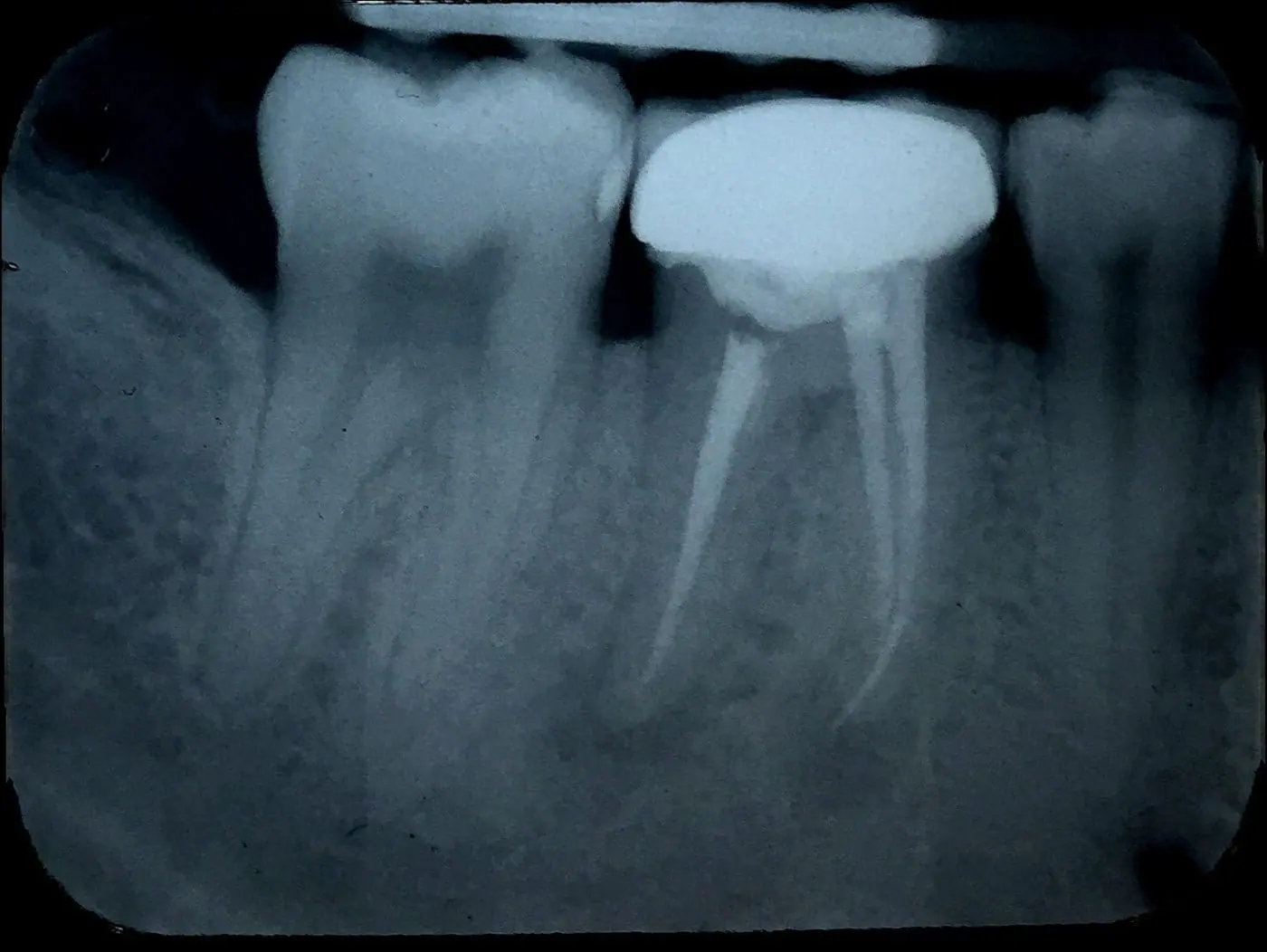 Before
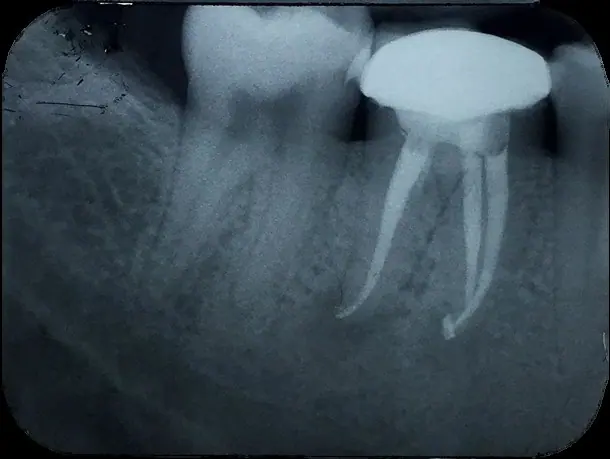 After
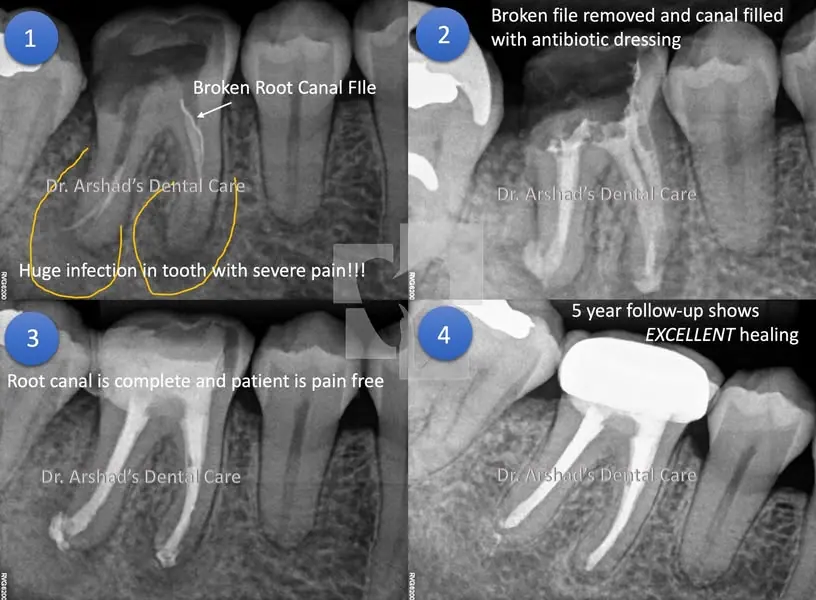 Follow-up
How long it takes
Two visits, fourteen days apart.
The gap is not scheduling. It is an antibiotic dressing left in the canals to kill what is left, and it is the reason a re-treatment is not a single visit.
Visit one
- 01
History, examination of the mouth, and the investigations the case calls for.
- 02
A diagnosis is established, and the plan is presented to you before treatment starts.
- 03
Under high magnification, all decay and the previous restorations are removed carefully.
- 04
The old root filling is removed and the correct working length of every canal is reached.
- 05
The canals are cleaned and disinfected, and an antibiotic dressing is placed.
Visit two
- 06
At the next visit the canals are filled to a 3D seal and a permanent filling is placed.
We keep treating the case until the tooth becomes completely symptomless. Some cases need another visit, and that is said before anything starts rather than after.
Both options, with their real numbers
Re-treat it, or replace it.
You have usually been told the tooth is finished. It usually is not, but where it genuinely is, the alternative is named here with what it actually costs rather than left for you to find out later.
Cone Beam CT, where it is needed
An advanced technique and an essential aid in diagnosis. Like a mini CT scan of the mouth, it shows what small films cannot.
The microscope, not a loupe
Magnification can be changed, and the maximum of 22-24× is far above what a loupe can reach. It also gives depth perception for accurate placement, and a lighting system bright enough to light up the dark areas inside a tooth.
85-90% success
Most cases arrive with infection already present, which is why they usually take more than one visit.
Nine questions, in two halves.
Split by what you are deciding: whether the tooth can be saved at all, and then what it costs and how it compares to pulling it.
Whether it can be saved
5 questions01What does a failed root canal mean?
It means a tooth that has already had a root canal has developed infection and is now hurting.
02What are the signs of a failed root canal?
Four things patients notice: pain on biting, swelling, pus discharge, and sudden severe pain.
03How is a failed root canal diagnosed?
By understanding what went wrong first. That means a full history, an examination of the mouth, and investigations, small X-rays, and where the case needs it a CBCT scan, which is like a mini CT scan of the mouth. Only once all of that is in front of us is a plan made and put to the patient.
04Can the tooth be saved?
The tooth can be saved as long as there is enough tooth structure, and I can reach the full length of all the root canals. The second point is especially important.
05Can a failed root canal be saved?
Usually, yes, on two conditions. There has to be enough tooth structure left, and the full length of every root canal has to be reachable. The second matters most. The main cause of a failed root canal is the first dentist not filling the canal to its full length, and they may have blocked it in a way that means it cannot be reopened all the way.
Cost, visits and the alternative
4 questions01How many visits will it take?
Usually two or more. We keep treating the case until the tooth becomes completely symptomless.
02Why is it more expensive to re-treat a failed root canal?
Because it takes more visits to complete, more specialised equipment is needed, and more materials are used than in a conventional root canal.
03Is re-treatment better than pulling the tooth and having an implant?
Re-treatment succeeds in 85 to 90% of cases and costs PKR 55,000. An implant with a crown starts at PKR 170,000, needs at least three months for the bone to integrate, and often a bone graft as well. Keeping your own tooth is usually both the cheaper and the quicker answer where it is possible.
04How successful is root canal re-treatment?
85 to 90%.
Published work
Twelve peer-reviewed papers by Prof. Dr. Arshad Hasan.
On root canal failure. Six of the twelve are lead-author. Every entry links to its DOI.
- 012023Exploring the Most Effective Apical Seal for Contemporary Bioceramic and Conventional Endodontic Sealers Using Three Obturation TechniquesMedicinaView DOI
- 022018Combined Endodontic and Surgical Management of Twin Rooted Maxillary Lateral Incisor with a Palatogingival Groove.Iranian Endodontic JournalLead authorView DOI
- 032026An Animal Model of Pulpitis Based on an Outbred Mice Strain and Its Histological AnalysisJ. of Visualized Experiments (JOVE)Lead authorView DOI
- 042023A novel experimental model to investigate fungal involvement shows expression of Dectin‐1 in periapical lesion pathogenesisJournal of Oral RehabilitationLead authorView DOI
- 052023Investigating In Situ Expression of Neurotrophic Factors and Partner Proteins in Irreversible PulpitisJournal of EndodonticsView DOI
- 062022Gene expression analysis of toll like receptor 2 and 4, Dectin-1, Osteopontin and inflammatory cytokines in human dental pulp ex-vivoBMC Oral HealthLead authorView DOI
- 072022Expression of Toll-like receptor 2, Dectin-1, and Osteopontin in murine model of pulpitisClinical Oral InvestigationsLead authorView DOI
- 082022Association between maternal chronic apical periodontitis (CAP) and low birth weight preterm birth (LBWPT)J. Pakistan Medical AssocView DOI
- 092021Outcome Of Endodontic Procedures Performed By Dental Interns Using Stainless Steel And Niti Files: A 10- Year Retrospective Study.J. Ayub Med Coll AbbottabadLead authorView DOI
- 102021Access Cavity Preparations: Classification and Literature Review of Traditional and Minimally Invasive Endodontic Access Cavity DesignsJournal of EndodonticsView DOI
- 112021Effect of Natural and Artificial Dentin Conditioners on the Release of Vascular Endothelial Growth FactorJournal of EndodonticsView DOI
- 122020Erosive Potential of 1% Phytic Acid on Radicular Dentine at Different Time IntervalsEuropean Endodontic JournalView DOI
Bring the films you already have, and any scan.
Bring any current dental X-ray, 3D scan and medical report with you. Book enough time with the receptionist if you want treatment at the same visit.
Elsewhere
Where else his work shows up.
Workshops, talks, published work and the procedure videos, on the sites that carried them. Every link opens where it was published.
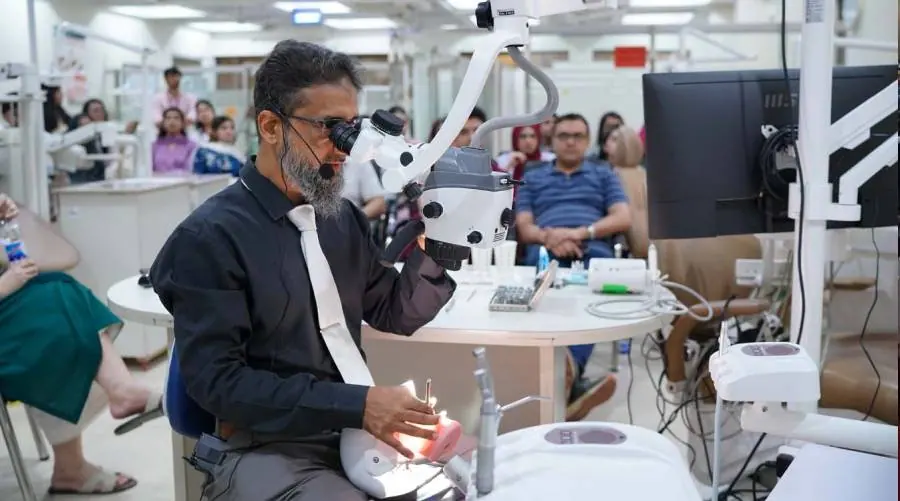 DentalNews.pk
Two-day workshop series on microscope-assisted endodontics, Lahore
Sept 2026
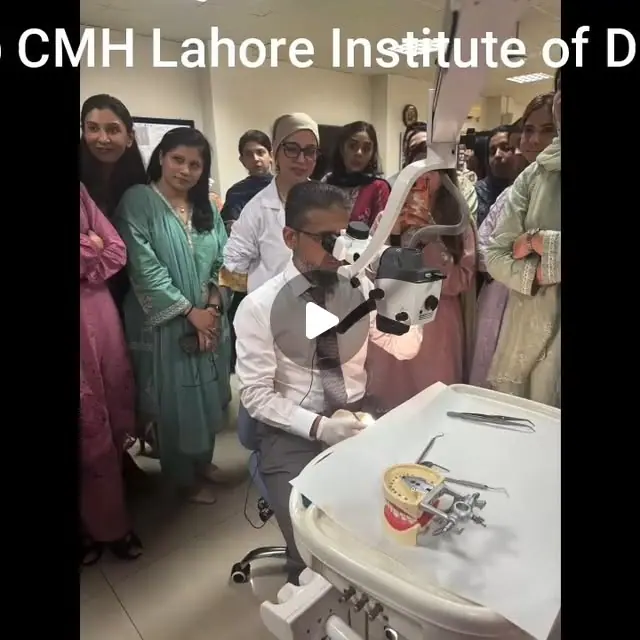 Instagram
Procedure videos and cases, in short form
Sept 2026
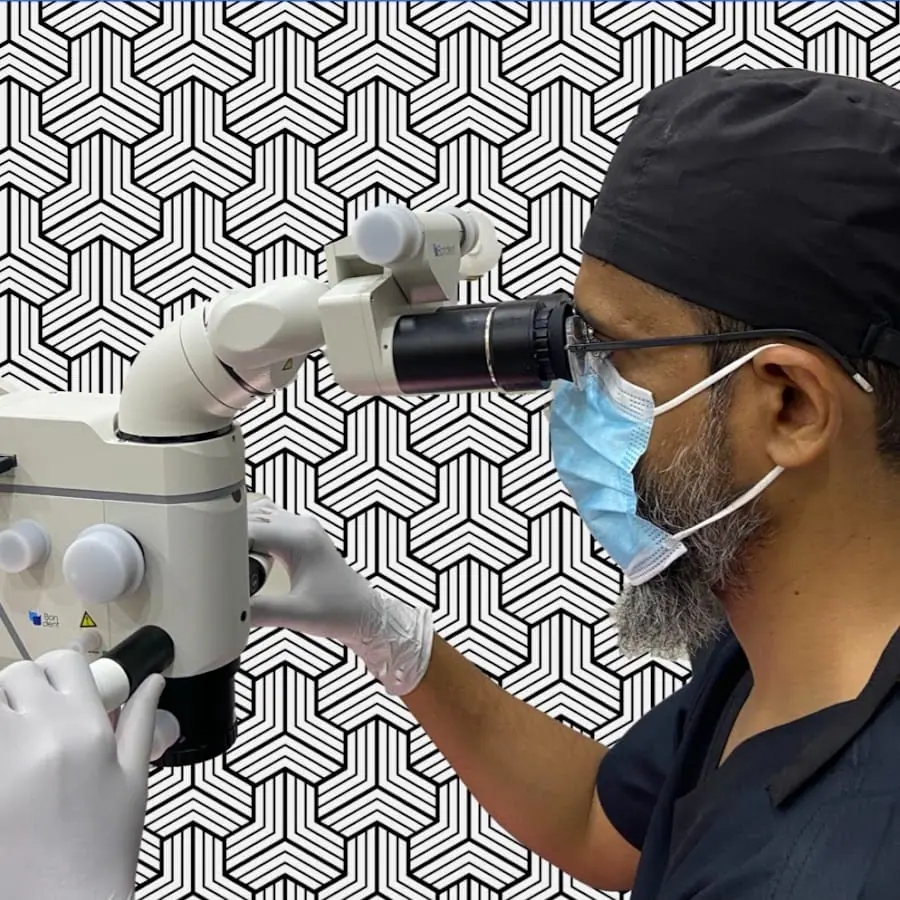 YouTube
26 procedure vlogs, with Urdu commentary
Jan 2026
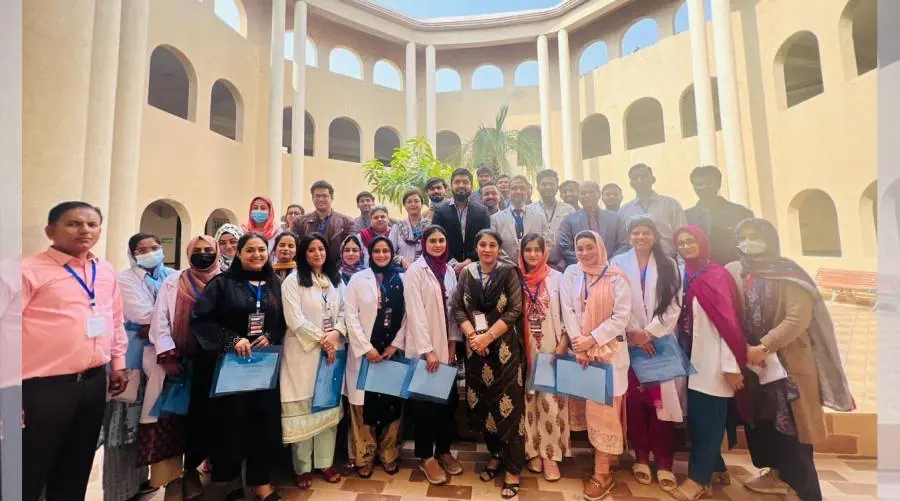 DentalNews.pk
Separated instrument retrieval workshop at LUMHS
Dec 2025
 YouTube
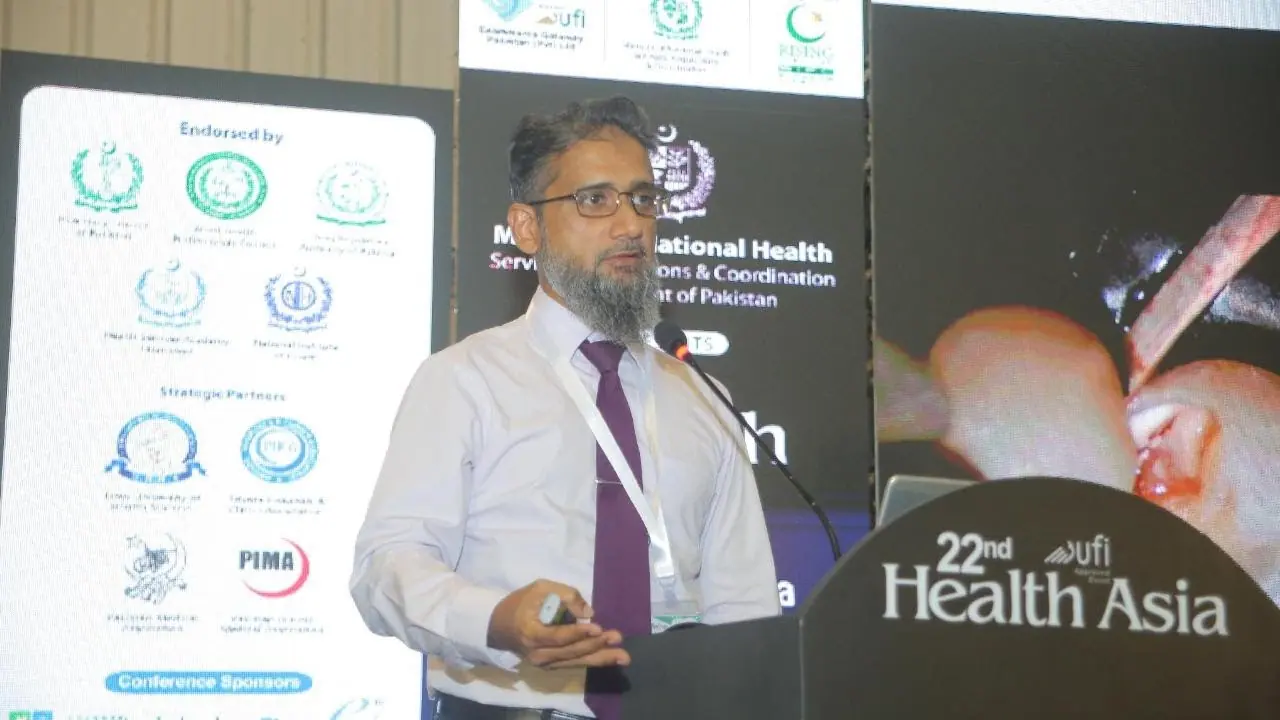
Microscope Enhanced Restorative Dentistry, Dentech Asia, Karachi
Oct 2025
 DentalNews.pk
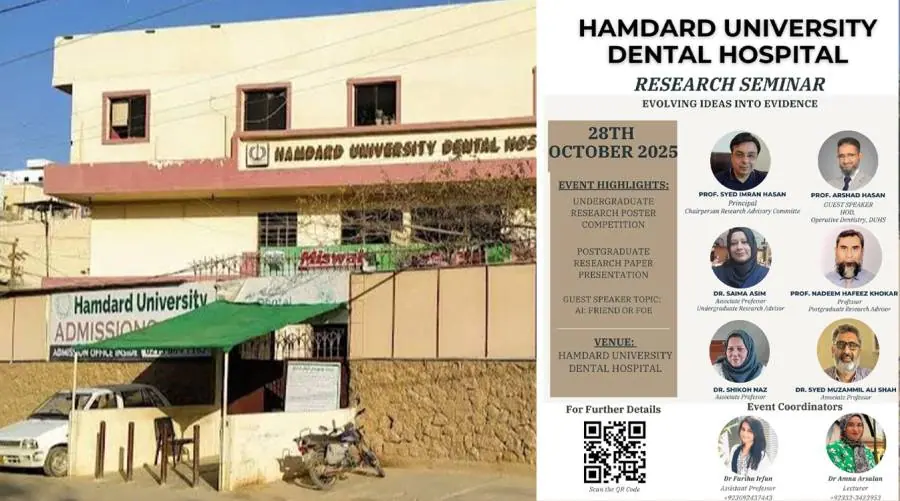
Hamdard University Dental Hospital research seminar
Oct 2025
 DentalNews.pk
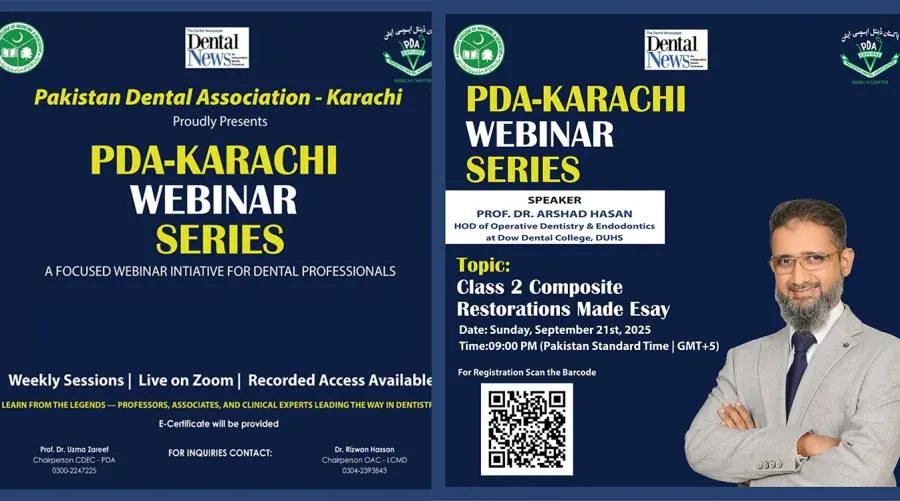
PDA Karachi second webinar with Prof. Dr. Arshad Hasan
Sept 2025
 DentalNews.pk
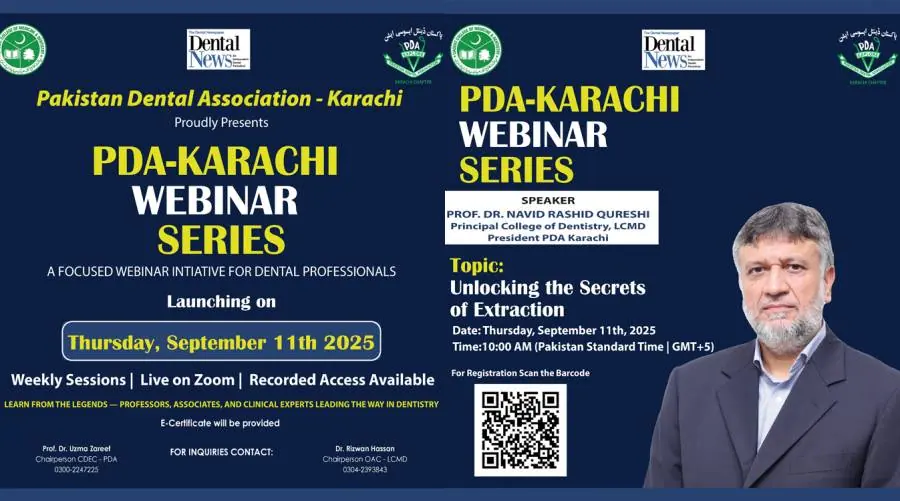
PDA Karachi webinar series 2025
Sept 2025
 DentalNews.pk
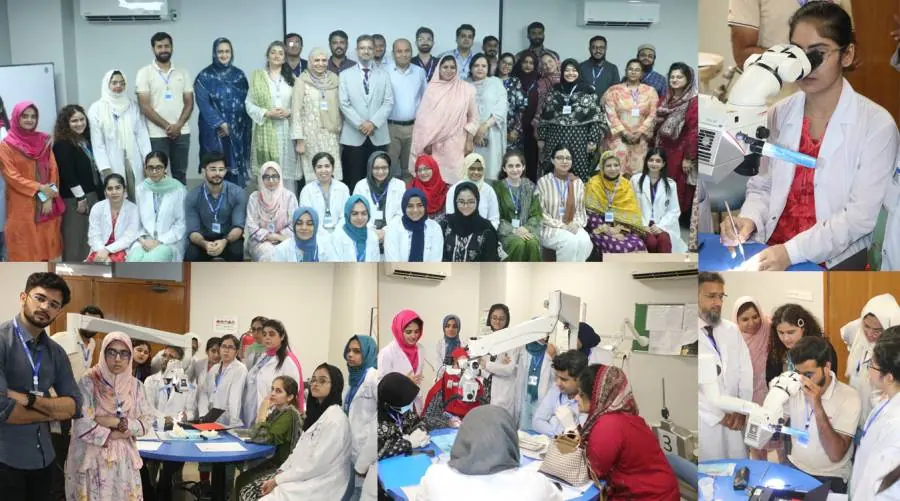
Hands-on workshop at Dow Dental College on file removal
Jun 2025
 Dental Tribune
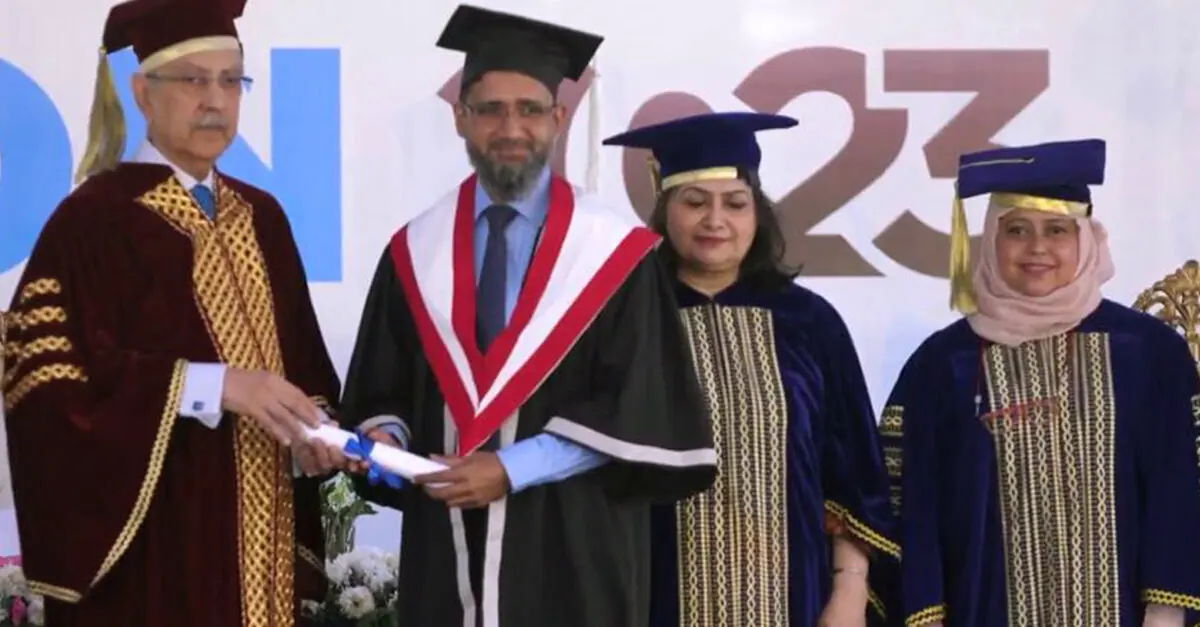
Prof. Dr. Arshad Hasan receives PhD in Operative Dentistry
Dec 2023