
Start here · first visit
See your own X‑ray, and decide after.
Examination, X-ray and diagnosis on the screen in front of you. The case is discussed, and you accept it or you don’t.
Examination, X-ray and diagnosis
PKR 3,500
The whole cost of finding out what is wrong, and the only money you spend before you have seen the problem yourself.
What the visit is
Every case here starts the same way: an examination, an X-ray, and a diagnosis you can see.
The case is discussed, and you accept it or you don’t. Nothing is booked in that appointment that you have not agreed to. The consultation is PKR 3,500, that is the whole cost of finding out what is wrong, and it is the only money you spend before you have seen the problem yourself.
Examination, X-ray and diagnosis. Quoted in writing before any treatment begins.
The film goes up where you can see it, and the case is talked through in front of you.
Where a case needs it, the same operating microscope used during treatment is used to look.
The protocol
Five steps, in this order.
- 01
Examined
You are examined, and the tooth or teeth you came about are looked at directly.
- 02
An X-ray is taken
It appears on the screen beside the chair within seconds.
- 03
The film is read with you
What it shows, and what it does not show.
- 04
The options are laid out
With the cost of each explained to you.
- 05
You decide
If you want treatment the same day, tell the receptionist when you book so the time is held.
Tooth 34 · Vertucci type V
A flat film is a shadow, not a photograph.
An X-ray is a two-dimensional shadow of a three-dimensional tooth, so roots overlap and canals hide behind one another.
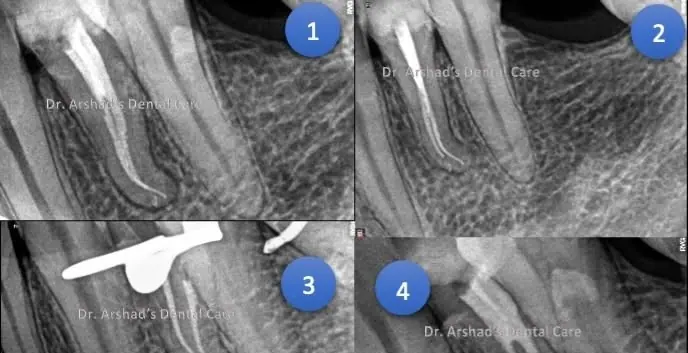 InvertedAs filmed
That is why the same tooth is often filmed from more than one angle, and why a scan is sometimes worth taking before anything is started rather than after something has gone wrong.
Which one you need
A film, or a scan.
Why a scan is a different question
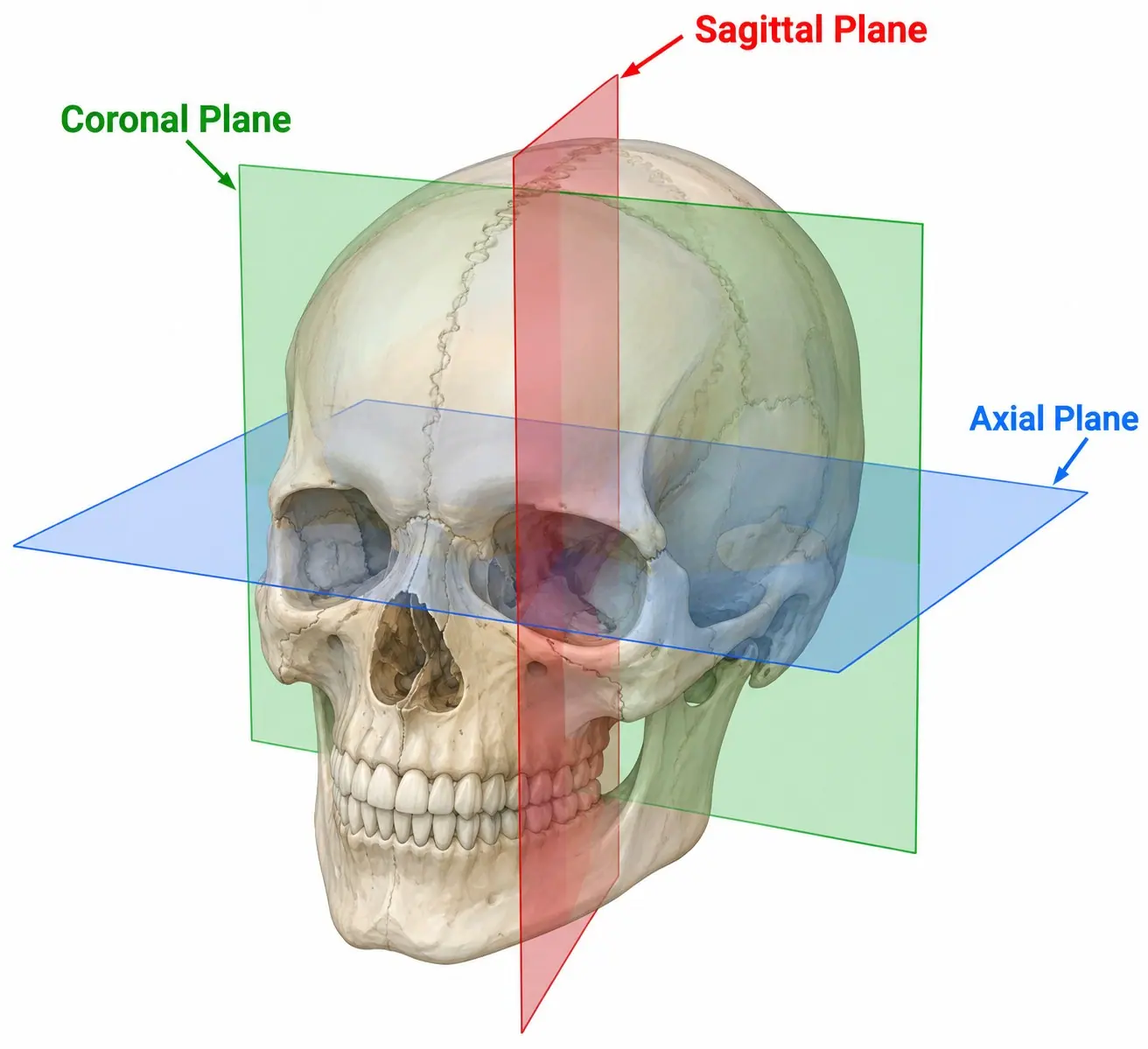
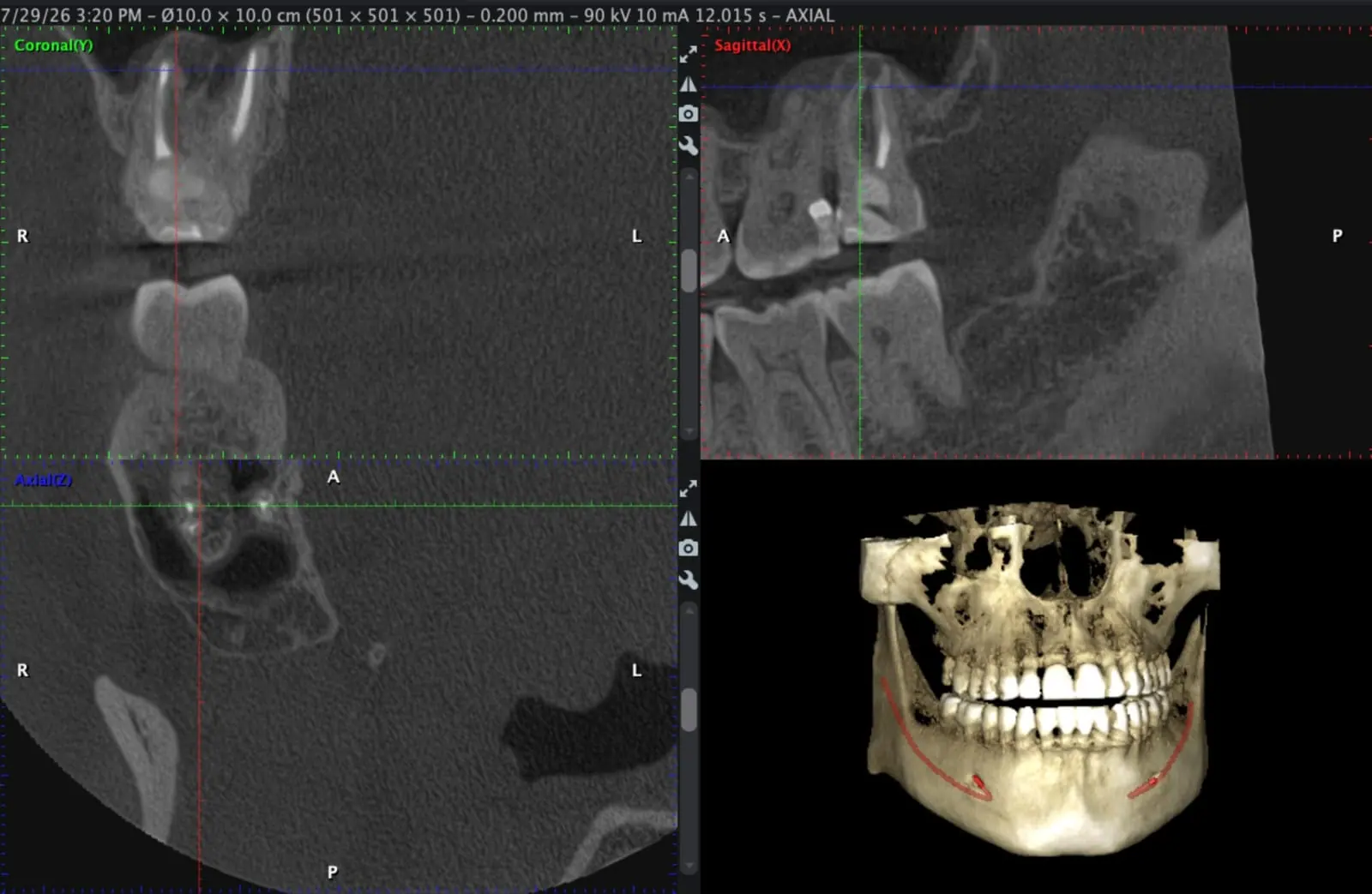
A film looks one way through. A scan looks three.
Sagittal, coronal and axial. The same three words label the scan window, in the same three colours.
What is used to look
The same microscope that does the treatment.
Four things decide what can be seen at the first appointment, and the first of them is the instrument the treatment itself is done through.
The operating microscope. Where a case needs it, the same scope used during treatment is used to look at the consultation.
The film appears on the screen beside the chair within seconds, which is why it can be read with you rather than sent to you.
A 3D scan, discussed where a flat film cannot answer the question, and used in implant planning.
Every option is written down with its price before anything begins.
On the day
From the door to the decision.
Monday-Thursday & Saturday · 4:00-8:00 PM. Ample free parking, with a designated free lot nearby.
- On arrival
You are examined
The tooth you came about is looked at directly.
- Then
The film is taken
It is on the screen beside the chair within seconds.
- Then
The film is read with you
What it shows and what it does not show.
- Then
The options are laid out
Discussed with you before anything is agreed.
- Before you leave
You decide
Nothing is booked that you have not agreed to. Same-day treatment only if the time was held.
Published work
Two peer-reviewed papers by Prof. Dr. Arshad Hasan.
On dental radiography. One of the two is lead-author. Every entry links to its DOI.
One visit, one number, no commitment.
Bring any current dental X-ray, 3D scan and medical report with you. An older film next to a new one is worth having in the room.
Elsewhere
Where else his work shows up.
Workshops, talks, published work and the procedure videos, on the sites that carried them. Every link opens where it was published.
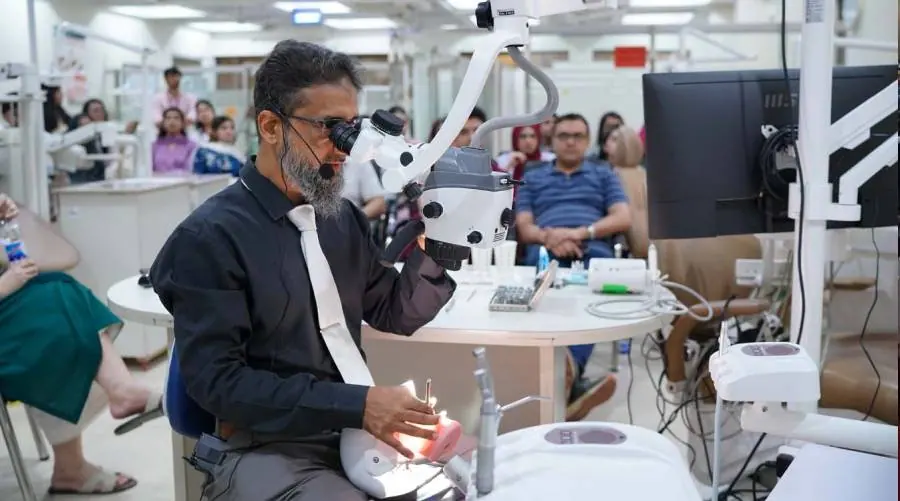 DentalNews.pk
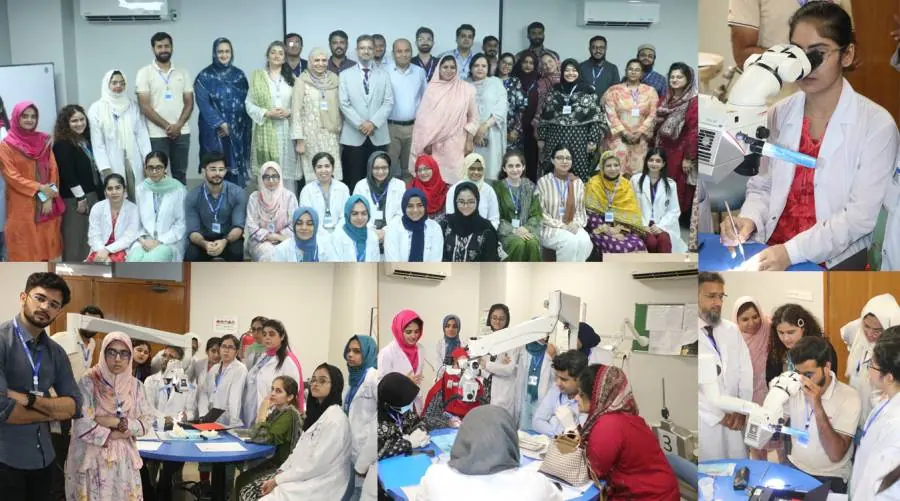
Two-day workshop series on microscope-assisted endodontics, Lahore
Sept 2026
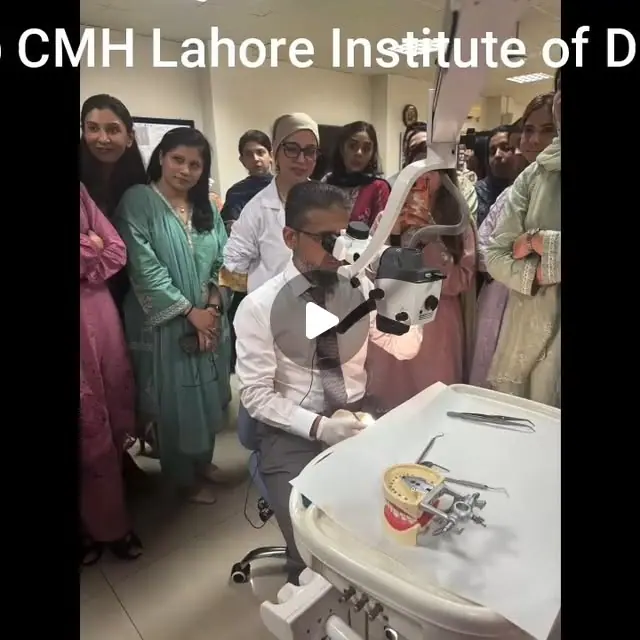 Instagram
Procedure videos and cases, in short form
Sept 2026
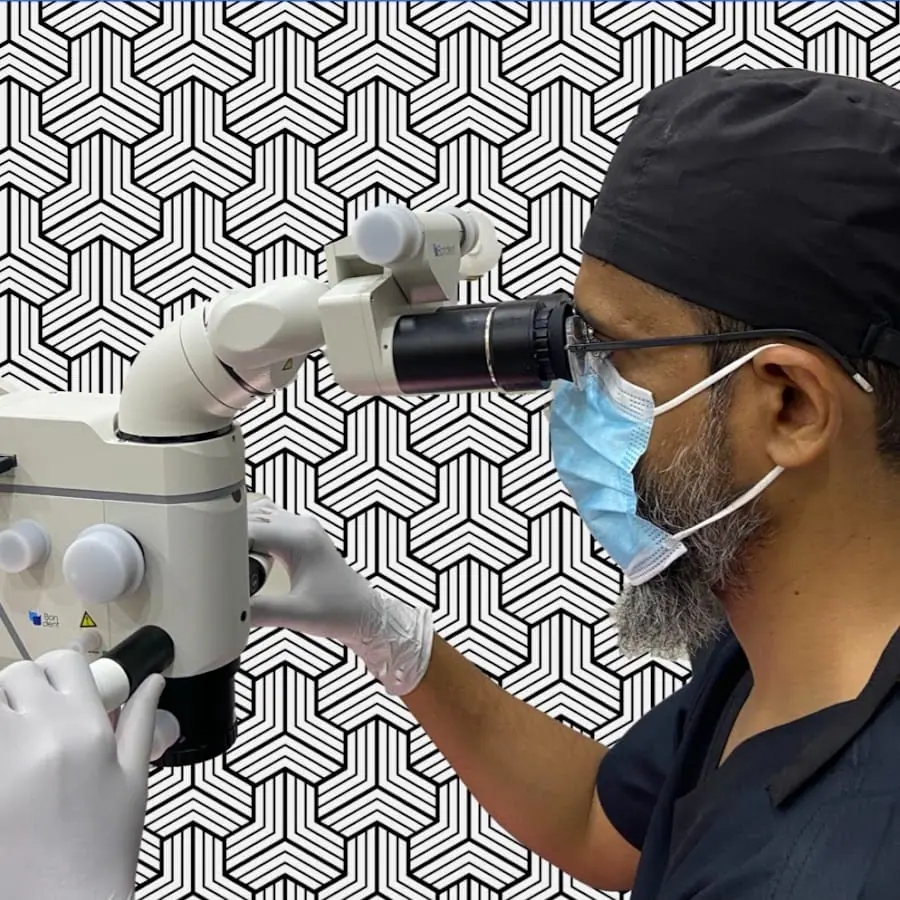 YouTube
26 procedure vlogs, with Urdu commentary
Jan 2026
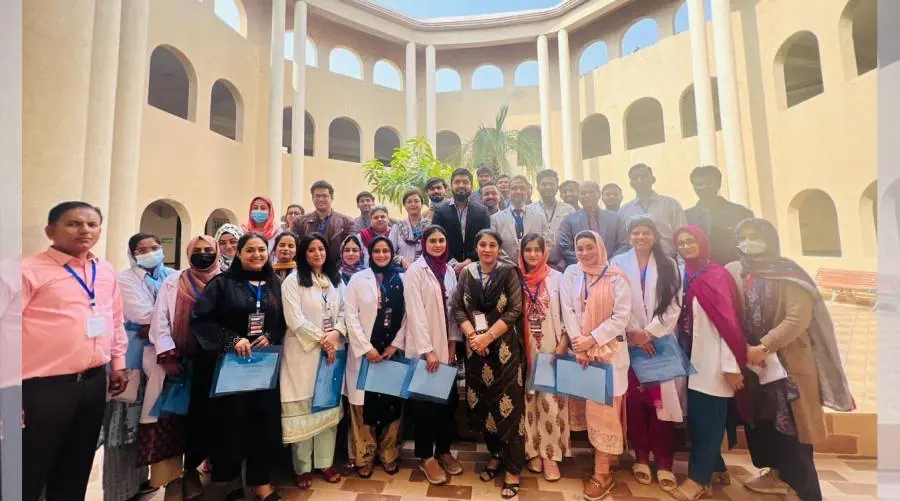 DentalNews.pk
Separated instrument retrieval workshop at LUMHS
Dec 2025
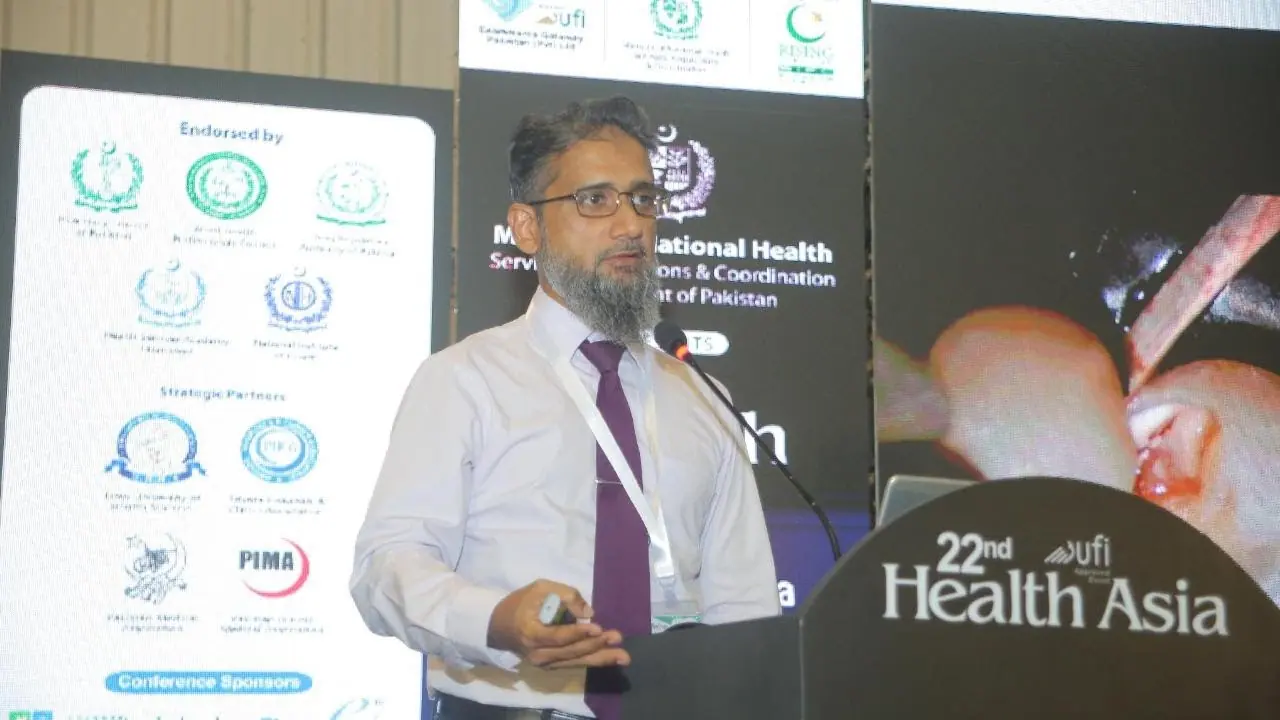 YouTube
Microscope Enhanced Restorative Dentistry, Dentech Asia, Karachi
Oct 2025
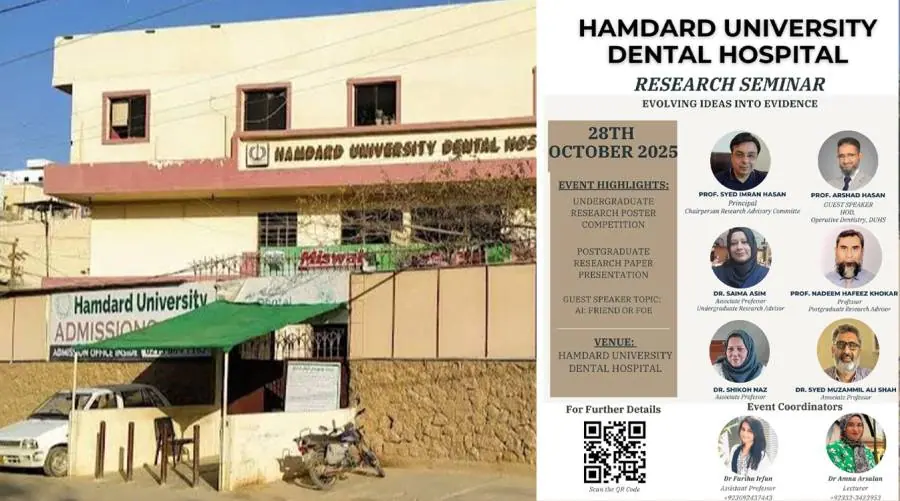 DentalNews.pk
Hamdard University Dental Hospital research seminar
Oct 2025
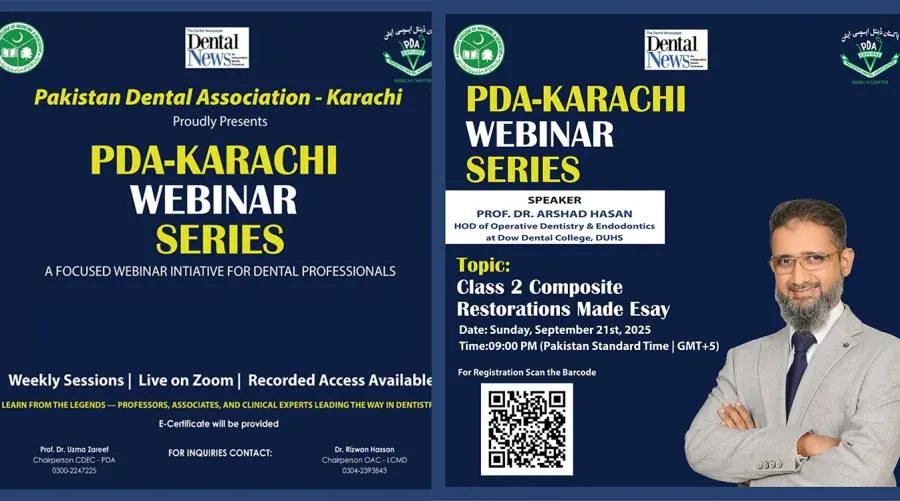 DentalNews.pk
PDA Karachi second webinar with Prof. Dr. Arshad Hasan
Sept 2025
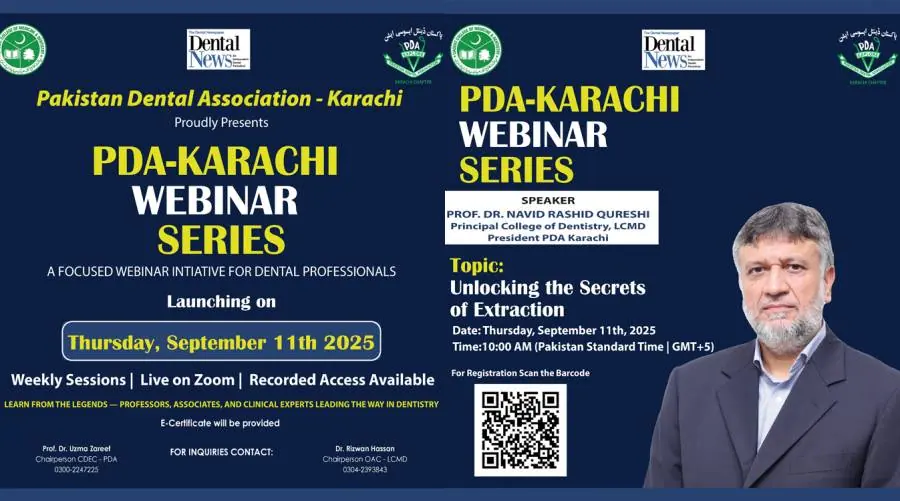 DentalNews.pk
PDA Karachi webinar series 2025
Sept 2025
 DentalNews.pk
Hands-on workshop at Dow Dental College on file removal
Jun 2025
 Dental Tribune
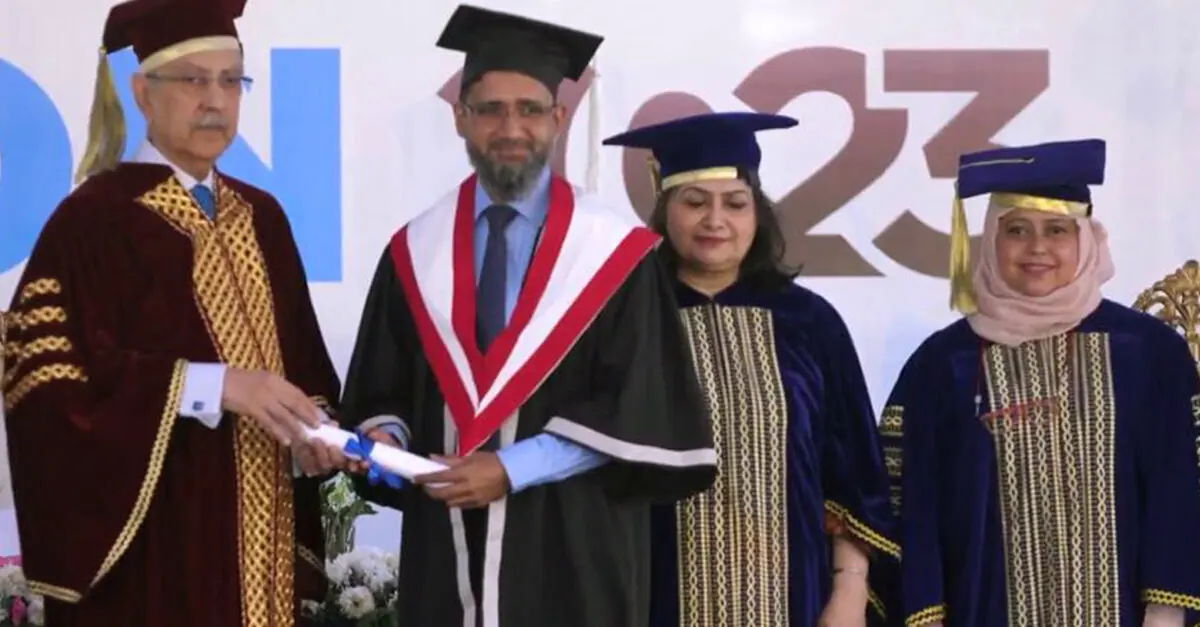
Prof. Dr. Arshad Hasan receives PhD in Operative Dentistry
Dec 2023