Your braces case could be done in a year. Not two or three.
 Dr Tabassum Ahsan Qadeer
from PKR 325,000
Paid 50% at the start and the rest in instalments across the treatment. The price depends on the category and complexity of the case.
About a year
How long treatment generally takes.
3, then monthly
Three visits in the first month, then once a month.
PKR 325,000
Fixed braces, paid in instalments across the treatment.
Four cases
Pick a case, read it case by case.
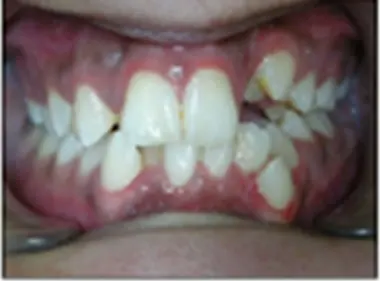
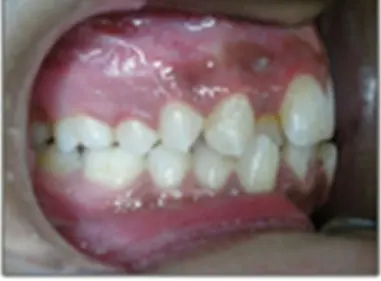
Each case is shown as a set of views, before on the top row and after directly beneath it.
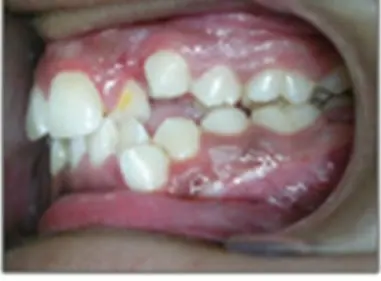
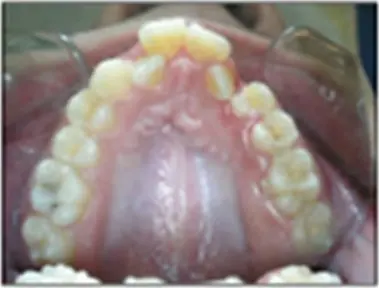
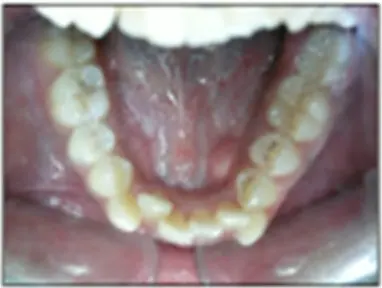
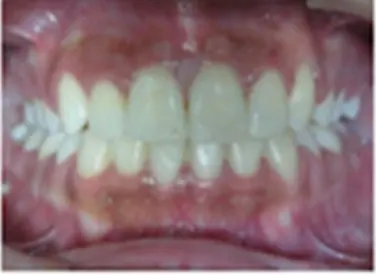
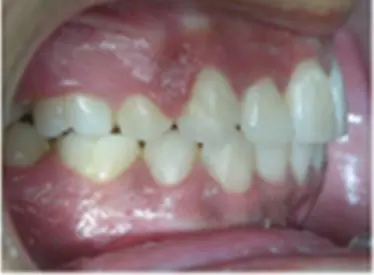
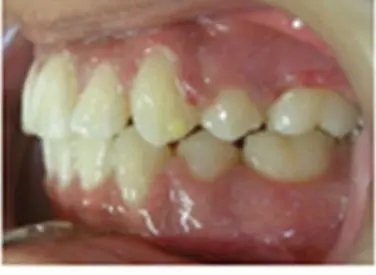
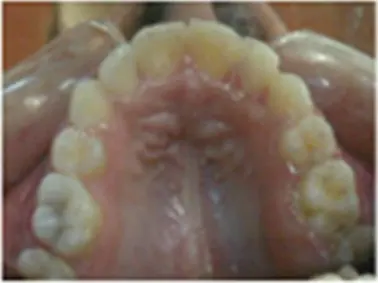
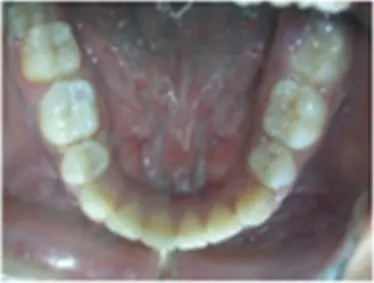
Crowding and an open bite at the front
A five-view record, before and after. Each column is the same view at the two dates, so the change is read straight down rather than hunted for across two pictures.
When to come
Come at seven, not at seventeen.
- At seven
The permanent teeth are arriving.
Ideally a child is seen now, so a developing problem can be seen and resolved. Come young and orthopaedic treatment of the jaws is possible while they are still growing.
- Through adolescence
Growth is still available.
Canines are the last teeth through, so they are at risk of impaction, particularly if the jaw is small or the teeth are large. Treated with fixed braces and by expanding the arch slightly; done early it gives better results.
- In adulthood
No age limit, except for the jaw.
Orthodontic treatment can be done regardless of how old you are. But once growth has finished, a jaw problem has two options: camouflage it by moving the teeth, or operate on the jaws.
What is age-dependent
The jaw, not the teeth
Teeth can be moved at any age. Growth can only be guided while there is growth left to guide, which is the whole reason a first orthodontic visit at seven is worth more than the same visit at seventeen.
Monday-Thursday & Saturday · 4:00-8:00 PM
Metal
It is always metal that wins.
Low maintenance, and the surest, fastest way of reaching the goal.
Ceramic
For those who would rather they were not seen.
The same treatment, chosen for appearance rather than for speed.
What it feels like
Pressure more than pain. A two out of ten.
A few procedures can cause pain depending on the pain threshold, and a simple Panadol handles it. Over the first few months patients get a fairly good idea of what their braces can tolerate, and the rule is to avoid hard things.
Around three visits.
Once a month.
Photographs are taken for the record, patients enjoy comparing with them when treatment finishes.
A retainer, worn for around nine months, which is the time the bone takes to form and consolidate around the teeth in their new positions.
How it is paid
Paid over the treatment, not up front.
The policy is 50% down payment and the rest in instalments across the length of the treatment. The price depends on the category and complexity of the case.
- Fixed braces
- PKR 325,000
- Retainer, per arch
- PKR 17,000
- Consultation & X-ray first
- PKR 3,500
Cleft lip and palate, adults and newborns.
Adults mostly, but also newborns, as there are few people trained to give them the quality of care they need.
Common questions
Thirteen questions, in three groups.
Asked most often
How long does treatment take?
It generally takes around a year.
01How painful is it?
It is generally pressure more than pain, on a scale of one to ten it should be a two.
02What can I eat with braces?
Avoid hard things. Over the first few months patients get a fairly good idea of what their braces can tolerate.
03Will my teeth move back after the braces come off?
At the end of treatment an appliance called a retainer is given, and it has to be worn for around nine months. That is the time the bone takes to form and consolidate in the new position around the teeth.
04At what age should a child first see an orthodontist?
Ideally at seven, as that is when the permanent teeth are coming through, so any developing problem can be seen and resolved.
05What are braces and who needs them?
Braces are small devices attached to the teeth to straighten them. You need them if you do not like the way your teeth look, or feel they are crooked.
06Metal or ceramic braces, which should I choose?
In that contest metal wins. They are low maintenance and the surest, fastest way to reach the orthodontic goal. Ceramic braces are for people who do not want the braces to be visible on their teeth.
07How much do braces cost?
Fixed braces are PKR 325,000 here, and a retainer is PKR 17,000 per arch. The price depends on the category and complexity of the case, and it is paid in instalments across the length of the treatment.
08What should I bring to my first orthodontic consultation?
Your full-mouth X-rays, an OPG and a lateral cephalometric. With those, if you decide to go ahead, treatment can start immediately. Photographs are taken at the start for the record, and patients enjoy comparing them when treatment finishes.
09How often are the appointments?
Around three visits in the first month, then once a month after that.
10Is it too late for adults to have braces?
There is no age limit for orthodontic treatment, it can be done regardless of how old you are. The one thing that is age-dependent is jaw correction: bringing a child early allows orthopaedic treatment of the jaws while they are still growing.
11My child has an impacted canine. What happens now?
Canines are the last teeth to come through, so they are at risk of becoming impacted, particularly if the jaw is small or the teeth are large. It is treated with fixed braces and by expanding the arch slightly. Done early it gives better results.
12When is jaw surgery needed instead of braces?
If a child has a jaw problem and did not come to an orthodontist early enough for orthopaedic treatment, there are two options once growth has finished: camouflage the problem by moving the teeth, or operate on the jaws.
Published work
Twelve peer-reviewed papers by Dr. Tabassum Ahsan Qadeer.
On orthodontics, malocclusion and impacted canines. Four of the twelve are lead-author. Every entry links to its DOI.
- 012025Correlation of Occlusal Characteristics with Mentolabial Sulcus in Patients at a Tertiary Care HospitalJ. Pakistan Medical AssocView DOI
- 022023Mandibular Asymmetry in Orthodontic Patients with Different Malocclusion PatternsJ. Bahria Univ Medical & Dental CollegeView DOI
- 032023Comparing the prevalence of root dilaceration in Class I and Class II malocclusionJournal of the Pakistan Dental AssociationView DOI Citation only
- 042022Effect of lip thickness and competency on soft-tissue changesAmerican J. of Orthodontics & Dentofacial OrthopedicsLead authorView DOI
- 052022Reasons for refusing orthognathic surgery by orthodontic patients: a cross-sectional surveyJ. Pakistan Medical AssocView DOI
- 062022Vertical growth pattern as a determinant of mandibular asymmetryPakistan J. of Medical SciencesView DOI
- 072021Identification of Orthodontic Extraction Predictors in End-On Class II MalocclusionJ. Pakistan Dental AssocView DOI
- 082020Lack of Association of Palatally Impacted Canines with Maxillary Arch Width and Lateral Incisor DimensionsJ. Pakistan Dental AssocLead authorView DOI
- 092020Pain perception of orthodontic treatment: a cross-sectional studyPakistan J. of Medical SciencesView DOI
- 102019Assessment of the changes in oral health related quality of life 24 hours following orthodontic separator placementJournal of the Pakistan Medical AssociationView DOI Citation only
- 112018Relationship Between Palatally Impacted Canines and Sella Turcica BridgingJ. Pakistan Dental AssocLead authorView DOI
- 122018Orthodontic Management of Multiple DilacerationsJ. Coll Physicians Surg Pak (JCPSP)Lead authorView DOI
Bring the films and it can start the same week.
Bring your full-mouth X-rays, an OPG and a lateral cephalogram. With those, if you decide to go ahead, treatment can start immediately.
Paid 50% down and the rest in instalments across the treatment. Orthodontics is carried out by Dr Tabassum Ahsan Qadeer. Monday-Thursday & Saturday · 4:00-8:00 PM.
Elsewhere
Where else his work shows up.
Workshops, talks, published work and the procedure videos, on the sites that carried them. Every link opens where it was published.
 DentalNews.pk
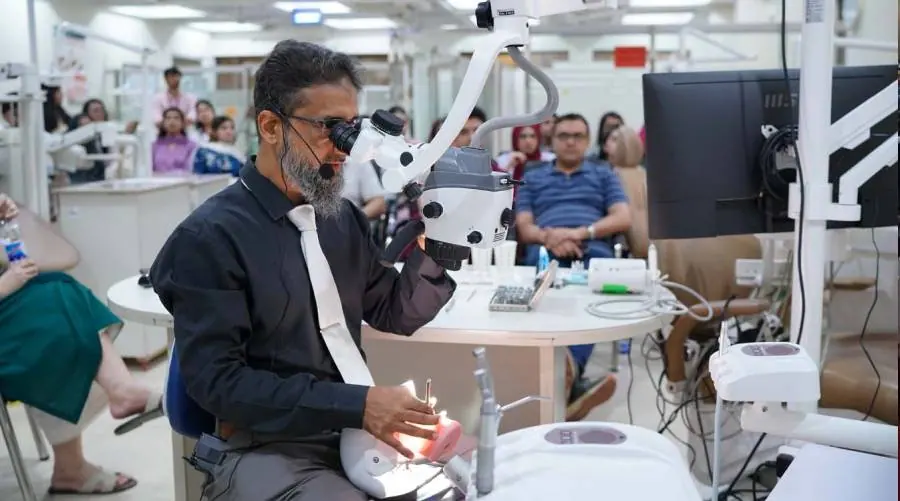
Two-day workshop series on microscope-assisted endodontics, Lahore
Sept 2026
 Instagram
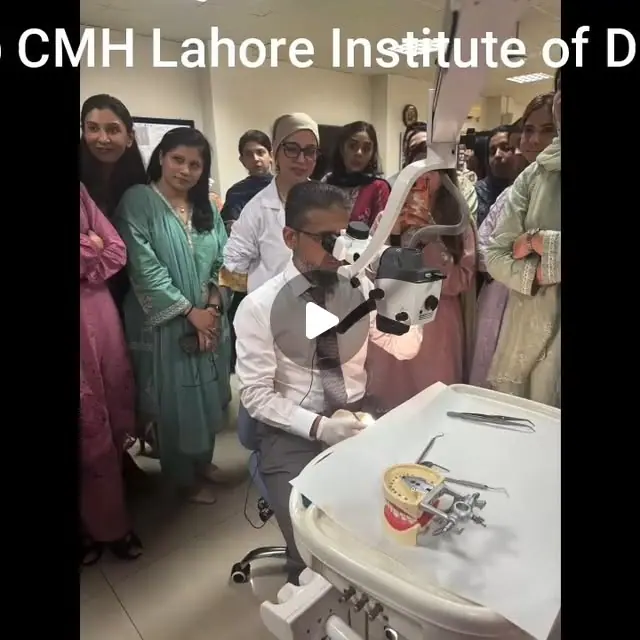
Procedure videos and cases, in short form
Sept 2026
 YouTube
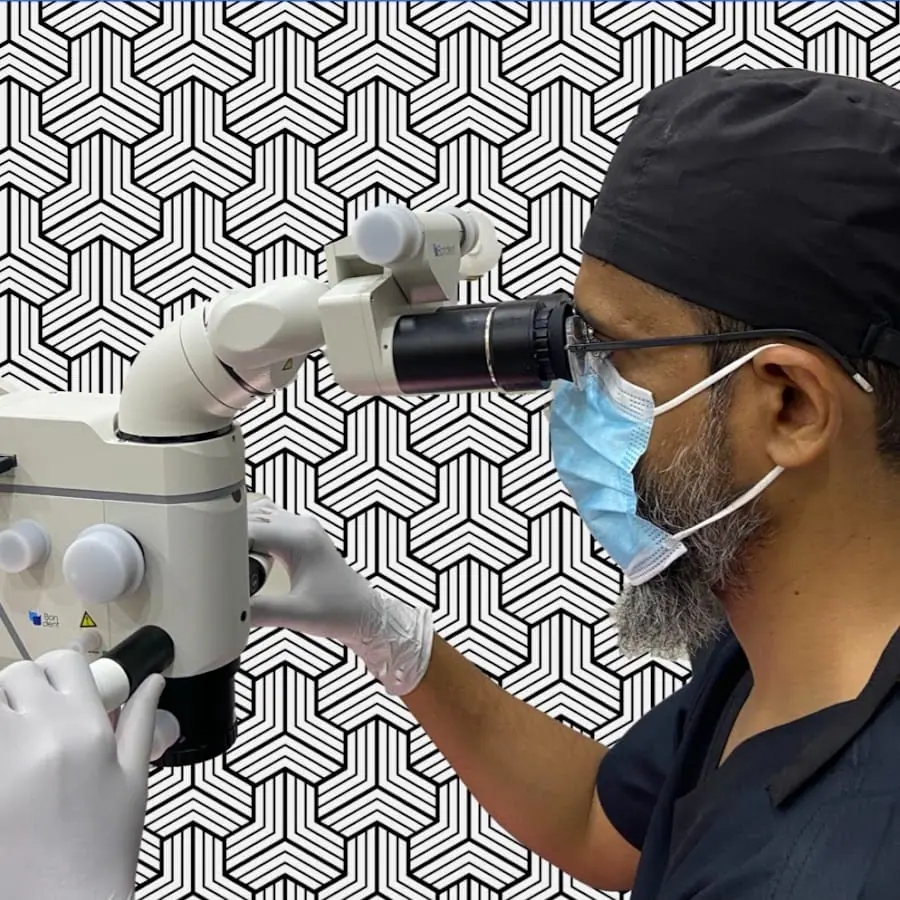
26 procedure vlogs, with Urdu commentary
Jan 2026
 DentalNews.pk
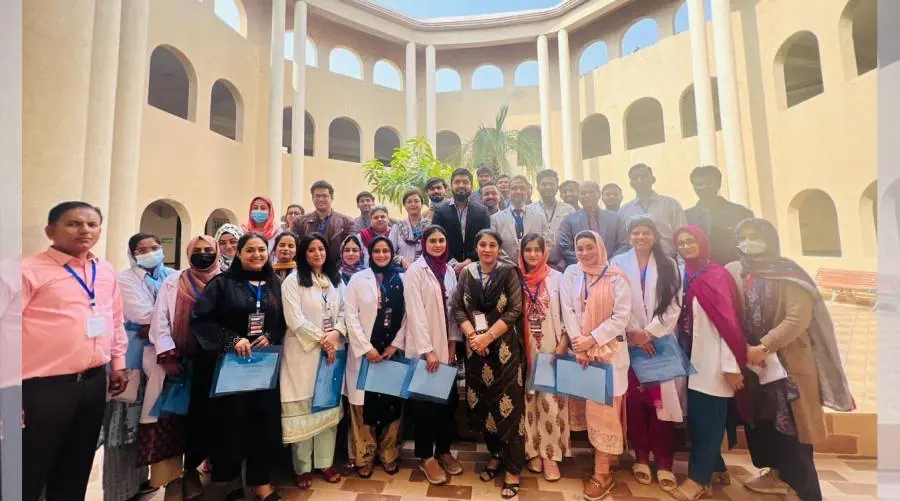
Separated instrument retrieval workshop at LUMHS
Dec 2025
 YouTube
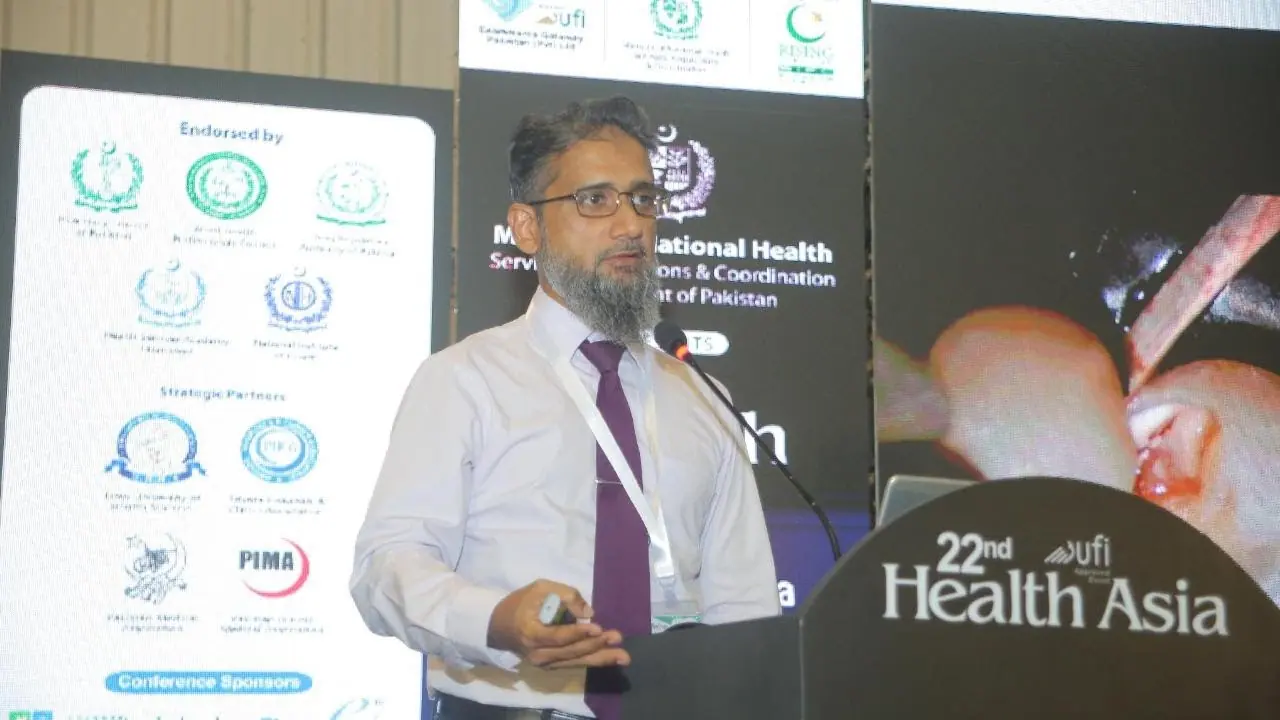
Microscope Enhanced Restorative Dentistry, Dentech Asia, Karachi
Oct 2025
 DentalNews.pk
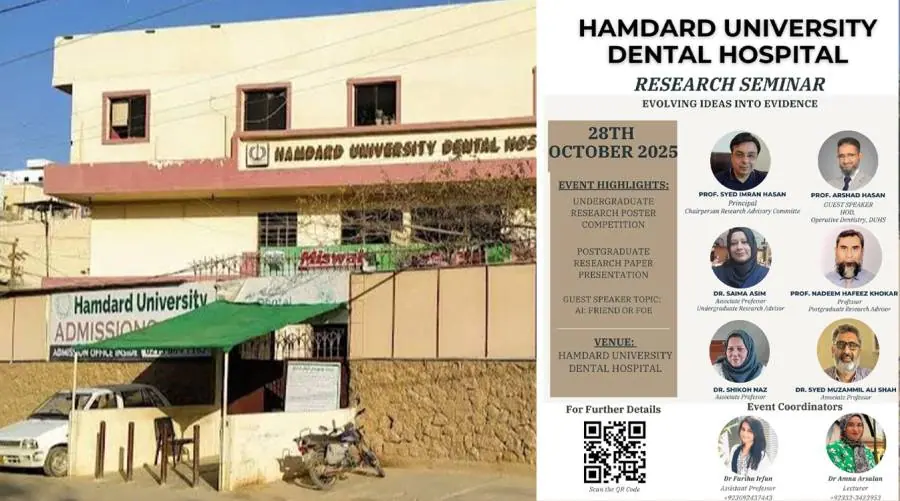
Hamdard University Dental Hospital research seminar
Oct 2025
 DentalNews.pk
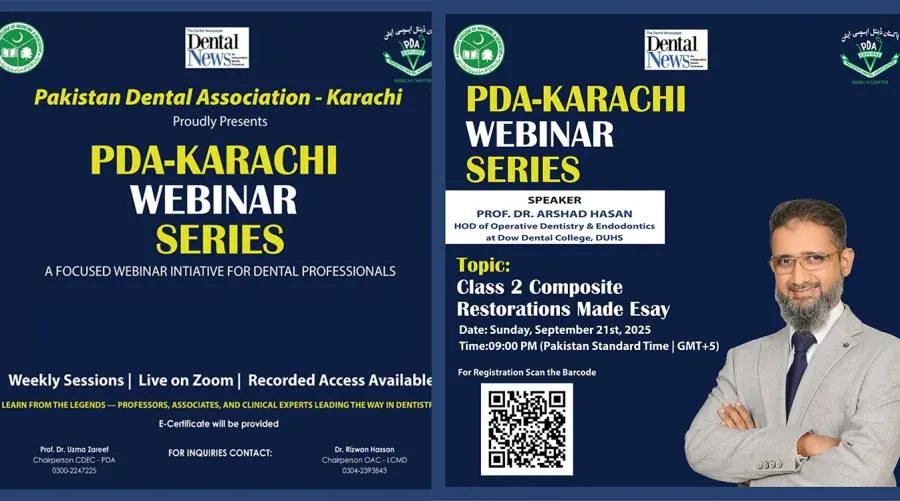
PDA Karachi second webinar with Prof. Dr. Arshad Hasan
Sept 2025
 DentalNews.pk
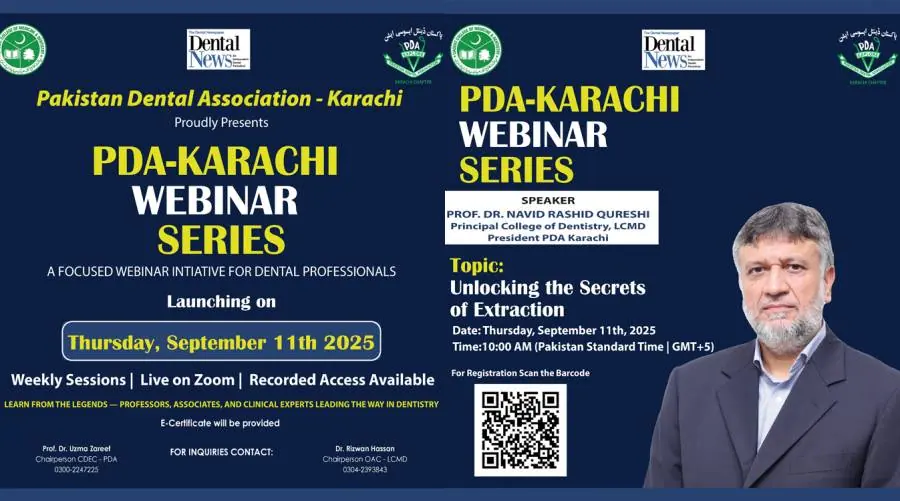
PDA Karachi webinar series 2025
Sept 2025
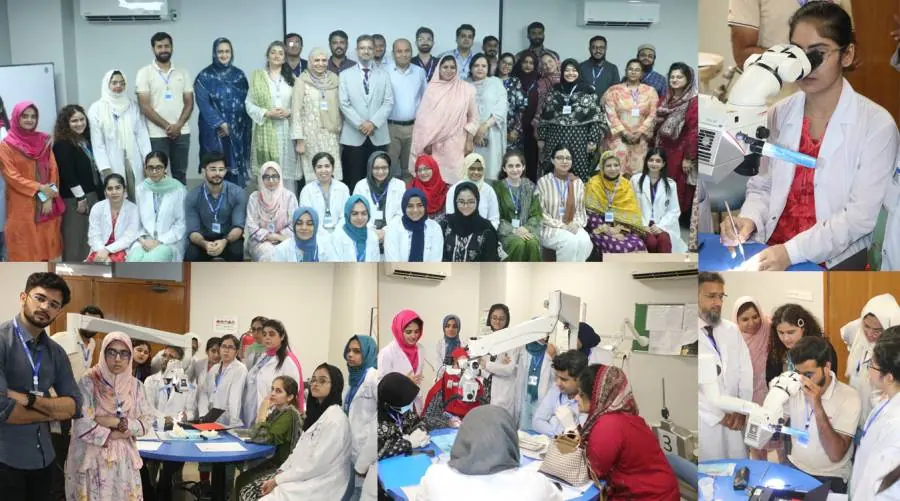 DentalNews.pk
Hands-on workshop at Dow Dental College on file removal
Jun 2025
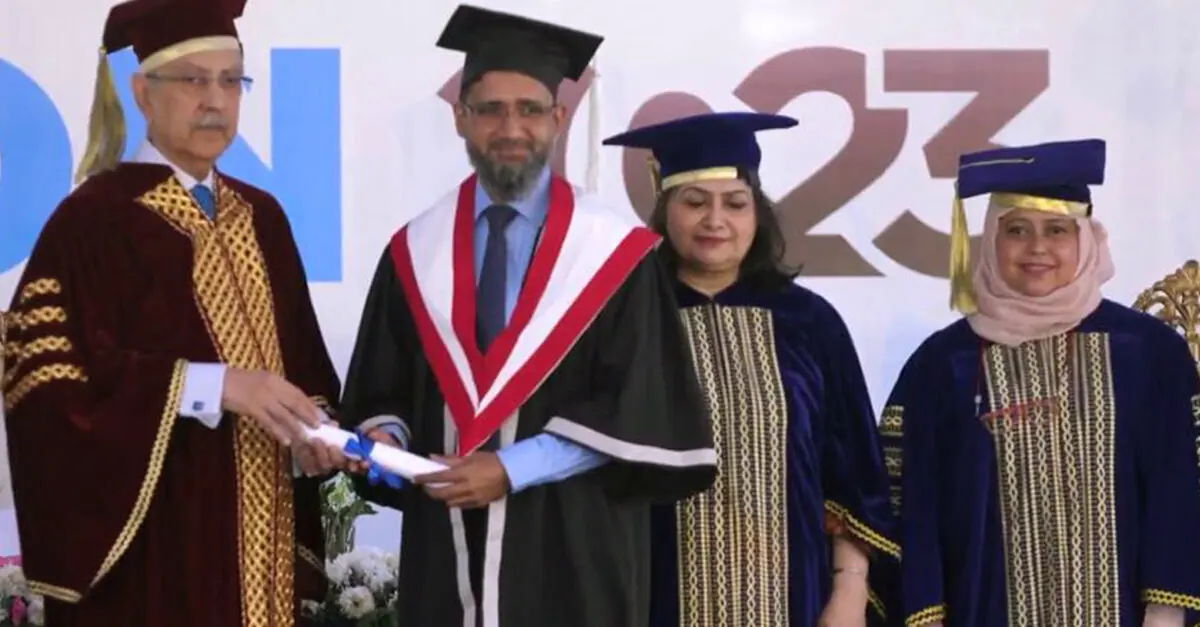 Dental Tribune
Prof. Dr. Arshad Hasan receives PhD in Operative Dentistry
Dec 2023