
Restorative & cosmetic
White fillings have a bad name. The reason is technique, not the material.
Done in a single visit, and a whole quadrant in one sitting.
 The result
Tooth-coloured filling
PKR 16,000
To start, rising to about PKR 20,000 for more complex fillings. Consultation and X-ray is PKR 3,500 before it.
Imperceptible to the eye, and technique sensitive.
These are tooth-coloured fillings that match the colour of the tooth and are imperceptible to the eye. But they have gathered a bad reputation with the public because of a high failure rate, and the reason for that rate is that they are technique sensitive.
They are sensitive to moisture and blood contamination while they set. To prevent it, a rubber dam provides top-class isolation, and it also lets me concentrate, which improves the chances of removing all of the decay.
Why you have cavities without a sweet diet
Four things at once
Bacteria that consume carbohydrates, on a tooth surface, for a sufficient amount of time.
Up to four years
Decay is slow. You may have given up sugar a year ago and it had already started.
Hidden carbohydrates
Present in a modern diet without us knowing.
Frequency, not quantity
How often you eat does more damage than a large amount at one time.
Why fillings fail
Two reasons, and both are avoidable.
Neither is about the material. Both are about how the filling was placed.
Moisture contamination while it sets
For a white filling, moisture contamination is disastrous. No amount of cotton roll and suction prevents it.
The only way to an absolutely moisture-free field is a rubber dam, Cerkamed, on every case.
Decay left behind
A major reason fillings fail is that dentists do not anaesthetise. To remove decay completely you have to go into the sensitive part of the tooth, and that is not possible without it.
Local anaesthesia always, and magnification to see what is being done. The dam also helps me concentrate on the work.
A case
Drag the handle, then watch one being done.
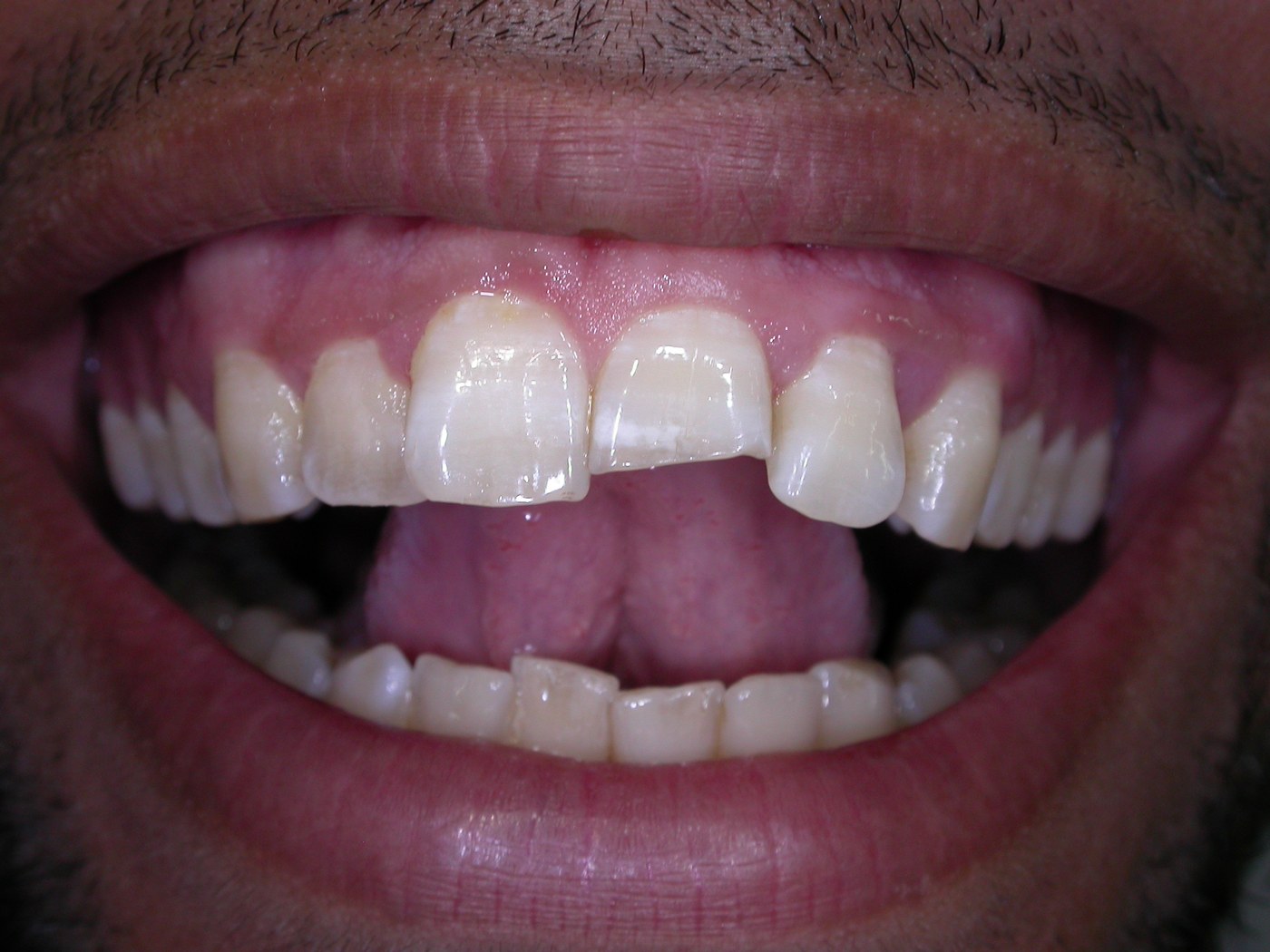
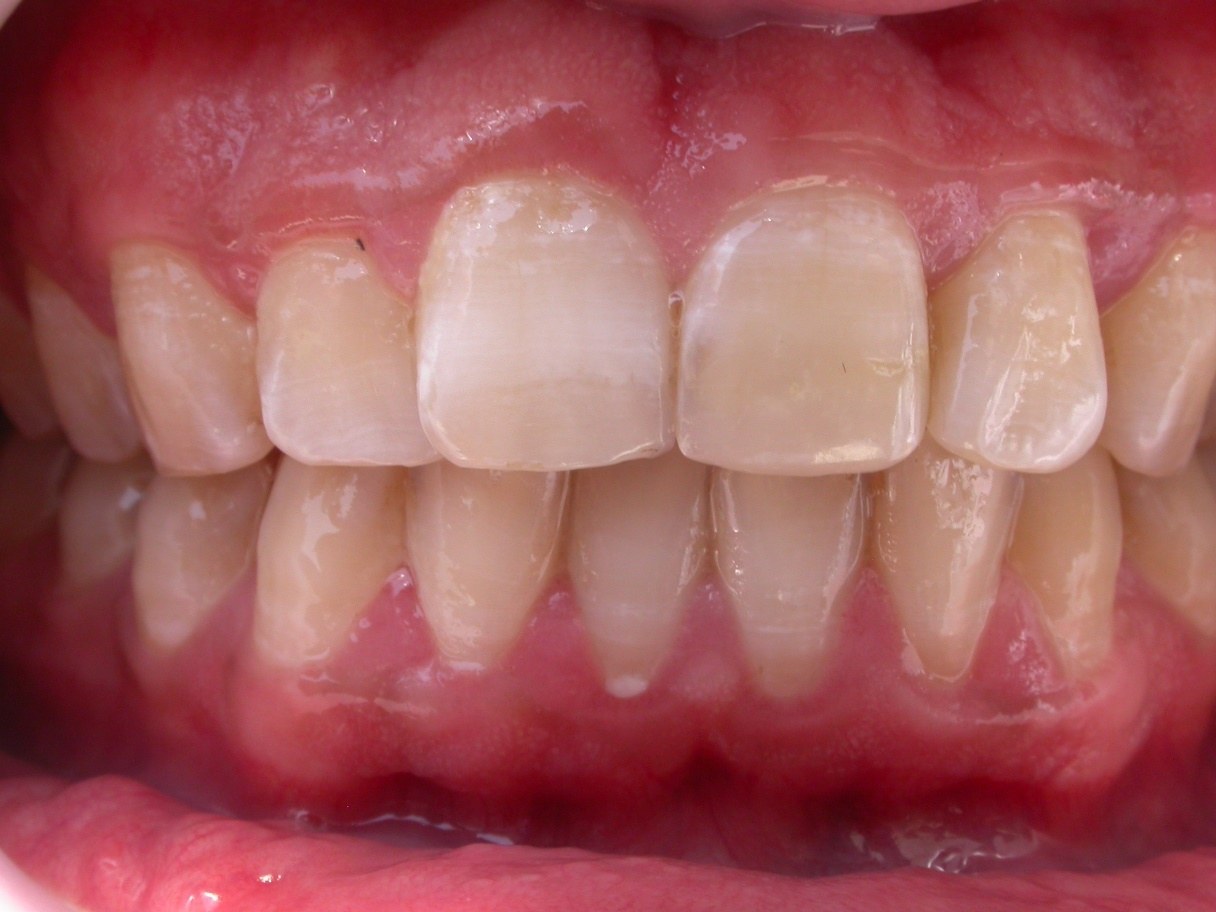
Both stills are the same mouth, registered so they line up in one frame. The film beside them is a Class II filling placed under rubber dam.
The case
The before frame is registered to the after, so the two line up in one frame. Drag the handle across.
The method
A Class II filling, start to finish, under rubber dam. The clamp and the sheet are in shot throughout, which is what keeps the tooth dry while it is bonded.
What it is made of
The materials, named.
- Germany
3M composite
The same brand for over two decades, with consistent results.
- Poland
Cerkamed dam
One of the finest European brands in isolation.
- Germany
Carl Zeiss loupes
Magnification for every case.
- Selected cases
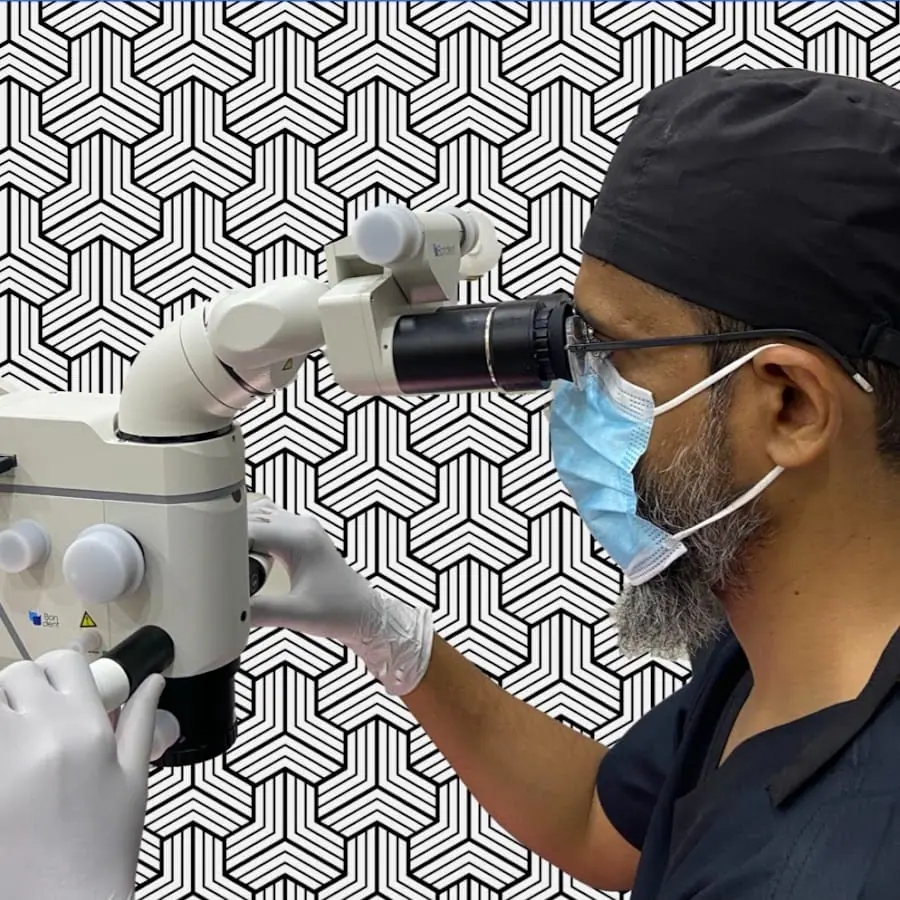
Operating microscope
Where its range of magnification and illumination is beyond what any loupe can offer.
A filling is only as good as what it is made of, and what holds the field dry.
And what holds the field dry
Rubber dam, on every case
A white filling is bonded, and bonding fails in the presence of moisture. Isolation is what makes a single visit practical and a whole quadrant possible in one sitting. It is also the step most often skipped, which is why the material gets the blame.
Monday-Thursday & Saturday · 4:00-8:00 PM
How long it takes
One quadrant, one visit.
Fillings are done in a single visit, and where several sit in the same area of the jaw they are done together. Rubber dam isolation is what makes that practical.
What that means for a visit
Four fillings in one quadrant is one appointment, not four. The dam goes on once, the field stays dry, and you are numb once rather than on four separate days.
Common questions
Eleven questions, grouped by when you are asking.
Asked most often
Why do fillings fail?
Fillings fail if moisture contamination is not avoided. The other big reason is failure to remove the decay, because dentists do not give local anaesthesia, and to remove decay completely you have to go into the sensitive part of the tooth.
Asked most often
How much does a filling cost in Karachi?
PKR 16,000 to start. More complex fillings go up to about PKR 20,000.
01Will my filling fail?
No. Your filling will not fail if all the standards of care are adhered to: rubber dam isolation, the best material, removing all of the decay, and using magnification to see what I am doing.
02Why does my filling feel sensitive?
A filling might feel sensitive on rare occasions right after the procedure. If it is deep, the nerves of the tooth have become sensitive and need time to adjust and settle.
03Why does my filling hurt when I bite?
Two possibilities. Either it is high in the bite, after a long appointment, and with anaesthesia, the mouth does not always close properly, so the bite may need adjusting at a short second visit. Or the bond has failed: the filling is sticking in some places and not others, creating a gap that acts like a suction pump, so biting forces trapped water out and the nerves read it as pain. That requires a redo.
04Why do I have so many cavities when I do not eat a sweet and sugary diet?
Dental decay is a combination of four things: bacteria that consume carbohydrates, on a tooth surface, for a sufficient amount of time. Decay is also slow, and takes up to four years to show as a large cavity, so you may have given up sugar a year ago and the decay had already started. Carbohydrates are also present in a modern diet without us knowing, and the frequency of consumption does more damage than a large quantity at one time.
05Why do fillings fall out?
Two reasons, and both are avoidable. Moisture contamination during placement, these materials are sensitive to saliva and blood while they set, which is what the rubber dam is for. And failure to remove all the decay, which happens because many dentists do not give local anaesthetic for a filling; removing decay completely means going into the sensitive part of the tooth, and that is not possible without it.
06Are white fillings as good as amalgam?
Tooth-coloured fillings match the tooth and are imperceptible to the eye. They have gathered a bad reputation in the general public because of a high failure rate, but that rate comes from how technique-sensitive they are, not from the material. Placed under a rubber dam with all the decay removed, with good material and magnification, they last.
07How many visits does a filling take?
One. If several fillings are needed in the same area of the jaw, one quadrant, they can all be done in a single visit. Rubber dam isolation is what makes that practical.
08What materials do you use for fillings?
Composite from 3M in Germany, the same brand for more than twenty-five years, with consistent results. Rubber dam from Cerkamed in Poland. Magnification through a German Carl Zeiss loupe, and the dental operating microscope on selected cases, where the range of magnification and light goes well beyond what any loupe offers.
09Why is my new filling sensitive?
On rare occasions a filling feels sensitive straight after the appointment. If it was a deep one, the nerves in the tooth have been disturbed and need time to settle back to normal.
Published work
Five peer-reviewed papers by Prof. Dr. Arshad Hasan.
On fillings and dental decay. One of the five is lead-author. Every entry links to its DOI.
- 012023Dentin–Pulp Complex Response in Molars of Rats after Occlusal and Cervical Restorations with Conventional Glass Ionomer Cement and Nano-Hydroxyapatite Silica Glass Ionomer CementApplied SciencesView DOI
- 022022Bonded amalgam as a fissure sealant in low-income setting: A randomised controlled trialJ. Pakistan Medical AssocView DOI
- 032021Associations of early childhood caries with salivary beta defensin-3 and childhood anemia: a case–control studyBMC Oral HealthView DOI
- 042019Predictors for Proximal Caries in Permanent First Molars: A Multiple Regression AnalysisJ. Contemporary Dental PracticeLead authorView DOI
- 052008Efficacy of chemo-mechanical caries removal with Carisolv.J. Coll Physicians Surg Pak (JCPSP)View DOI
Bring the tooth that is bothering you, and we will look at it.
Examination, X-ray and diagnosis is PKR 3,500, and you decide afterwards. Nothing is booked in that appointment that you have not agreed to.
Elsewhere
Where else his work shows up.
Workshops, talks, published work and the procedure videos, on the sites that carried them. Every link opens where it was published.
 DentalNews.pk
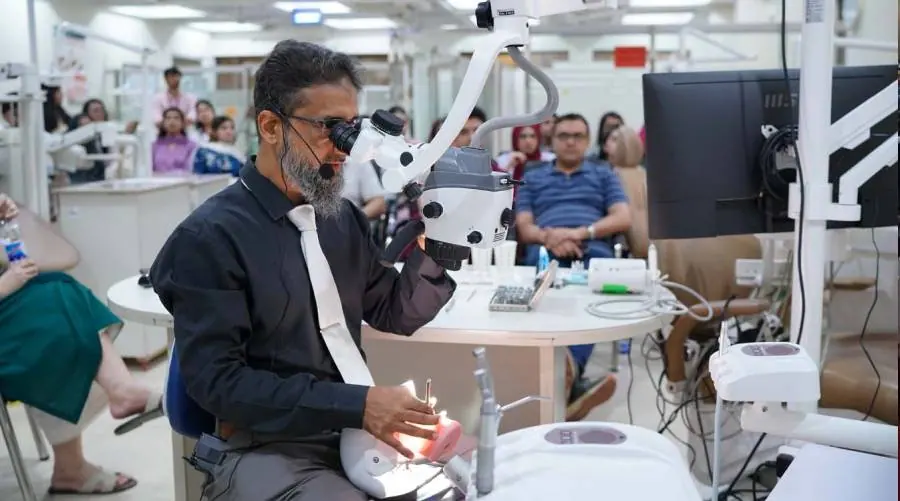
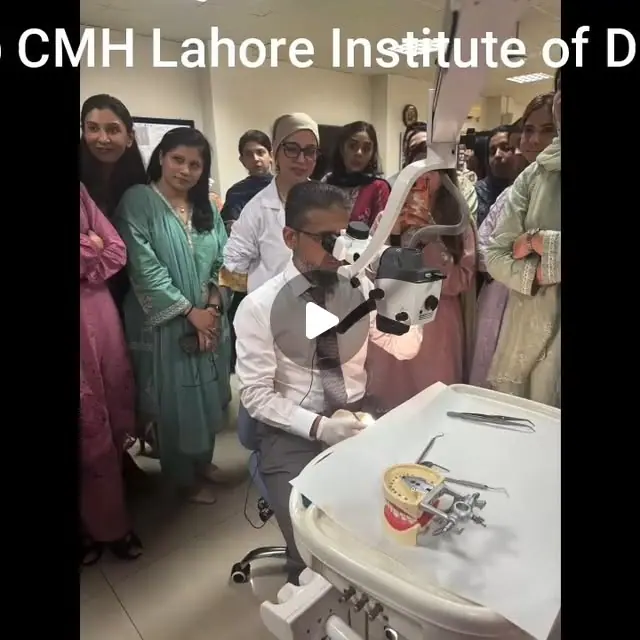
Two-day workshop series on microscope-assisted endodontics, Lahore
Sept 2026
 Instagram
Procedure videos and cases, in short form
Sept 2026
 YouTube
26 procedure vlogs, with Urdu commentary
Jan 2026
 DentalNews.pk
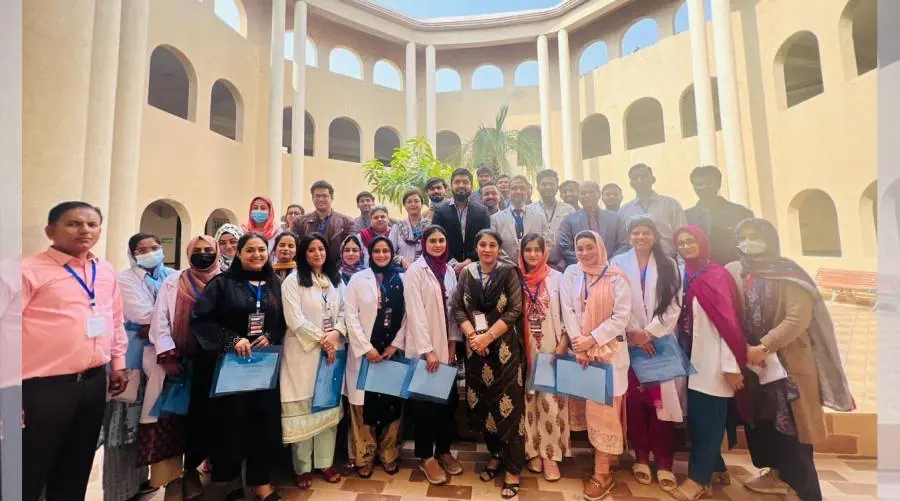
Separated instrument retrieval workshop at LUMHS
Dec 2025
 YouTube
Microscope Enhanced Restorative Dentistry, Dentech Asia, Karachi
Oct 2025
 DentalNews.pk
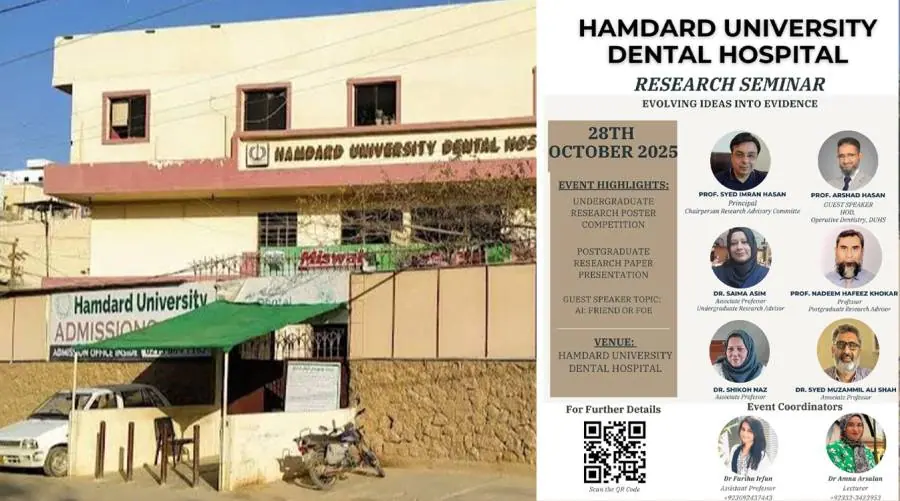
Hamdard University Dental Hospital research seminar
Oct 2025
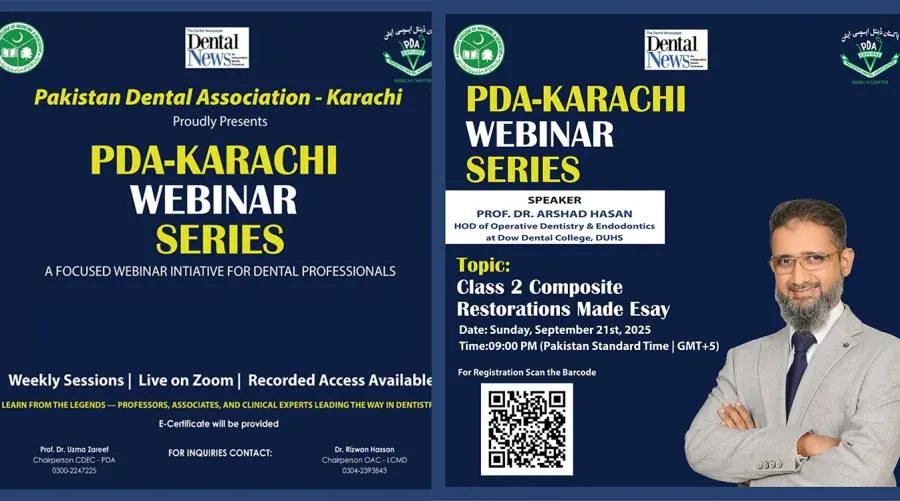 DentalNews.pk
PDA Karachi second webinar with Prof. Dr. Arshad Hasan
Sept 2025
 DentalNews.pk
PDA Karachi webinar series 2025
Sept 2025
 DentalNews.pk
Hands-on workshop at Dow Dental College on file removal
Jun 2025
 Dental Tribune
Prof. Dr. Arshad Hasan receives PhD in Operative Dentistry
Dec 2023