
Endodontics
A root canal that does not fail, and does not hurt.
Nine in ten are finished in a single visit, and the price is one number rather than a range.
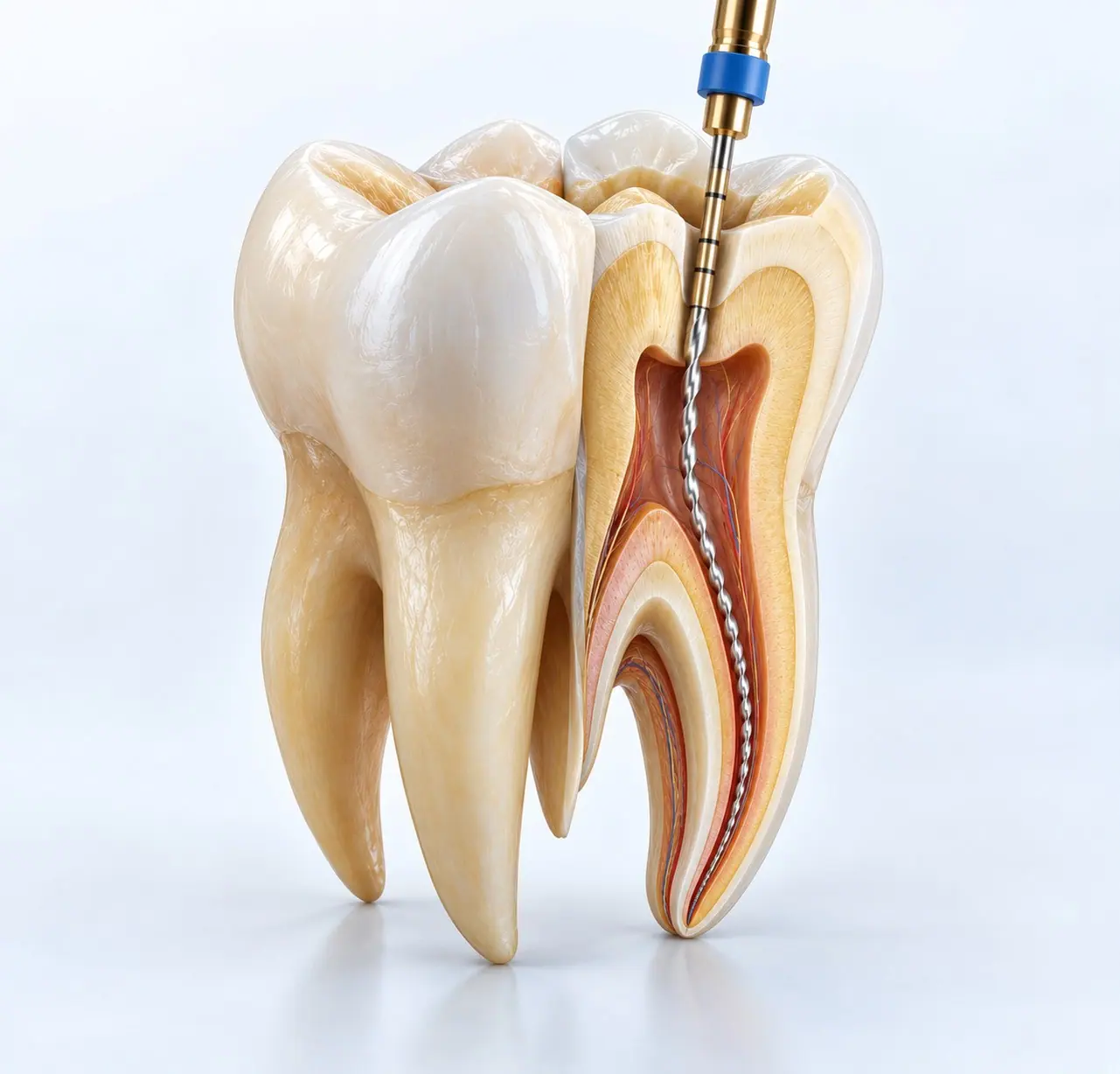 In section
Root canal treatment
PKR 48,000
One root canal, one price. The consultation and X-ray before it is PKR 3,500, and that is the only money you spend before you have seen the problem yourself.
PKR 48,000
One root canal, one price. Consultation and X-ray is PKR 3,500 before it.
9 in 10
Finished in a single visit, since rotary instruments made that safe.
95-100%
Success over periods exceeding ten years. 85-90% where the tooth already carries infection.
22-24×
Magnification. Vision is everything: you do more if you see more.
What it is
Treating the pulp inside the tooth.
A root canal treatment is essentially the treatment of diseased, painful or dead pulp tissue inside the tooth. That pulp senses hot and cold and nourishes the tooth. The disease is caused by dental decay carrying bacteria from the mouth into the pulp.
If treatment is delayed, the diseased pulp either causes a great deal of pain, or dies and causes infection.
A tooth can die without pain.
Why you have cavities without a sweet diet
Four things at once
Bacteria that consume carbohydrates, on a tooth surface, for a sufficient amount of time.
Up to four years
Decay is slow, and takes up to four years to show as a large cavity, so you may have given up sugar a year after it started.
Hidden carbohydrates
They are present in a modern diet without us knowing.
Frequency, not quantity
How often you eat does more damage than a large amount at one time.
Three things decide whether it lasts.
All three are equipment and method, not luck.
22-24× magnification
In dentistry, vision is everything. You do more if you see more. Canals are not missed, and decay comes out completely. Objects smaller than a fraction of a millimetre are simply not visible to the naked eye.
The rubber dam, on every case
It lets the dentist use highly concentrated chemicals to clean inside the canals and kill the bacteria. Dentists who do not use one avoid those chemicals, because they taste bad, and risk the treatment.
Past ten years, and still there
Lower, at 85-90%, where the tooth already carries infection. A lower rate does not reduce the utility of the procedure. These figures are for periods exceeding ten years.
Rotary instruments
In Pakistan since the early 2000s, and here from the start.
- Late 1990s
A revolution in endodontics
Rotary endodontics is introduced. Before it, canals were prepared with manual instruments over several visits.
- Early 2000s
It reaches Pakistan
He was one of the early adopters.
- Today
Modern Super Flexible Root Canal Instruments made from Nickel titanium
Instruments made to save teeth in a very conservative way, so patients keep them for longer.
Rotary is why nine in ten are finished in a single visit. Before it, canals were prepared with manual instruments over several appointments.
What is in the room
- Rotary NiTi
- Safer preparation of the canals over fewer visits, and in 90% of cases a single visit.
- Rubber dam
- On every case. In much of the developed world a root canal specialist can be sued for not using one.
- 22-24x Dental Operating Microscope
- Unlike a loupe the magnification can be varied, and it gives real depth perception with a very bright light down into the tooth.
- 14-day dressing
- Cases that arrive with infection, and some re-treatments, need an antibiotic dressing left in the canals for fourteen days.
Monday-Thursday & Saturday · 4:00-8:00 PM
Why root canals fail
What goes wrong elsewhere, and what is done here.
Failures usually happen for four reasons, and all four are avoidable.
The procedure is performed without proper isolation.
A rubber dam on every case. Complete isolation, so neither the bacteria in saliva nor the moisture itself gets inside the tooth.
It is performed without magnification, so canals are missed and decay is left behind.
Up to 22-24×, varied through the case, with real depth perception and a bright light down into the tooth.
Bacteria are still present in the canals when the root canal is completed.
Isolation is what makes the strong disinfectants usable at all, a dentist without a dam cannot use them, because they taste extremely bad.
Moisture during filling causes the filling to fail.
The same dam keeps the field dry while the permanent filling sets, which is when contamination does the damage.
One case · Vertucci type VIII · tooth 35
A lower premolar with three separate roots.
Four films from the same case, in the order they were taken.
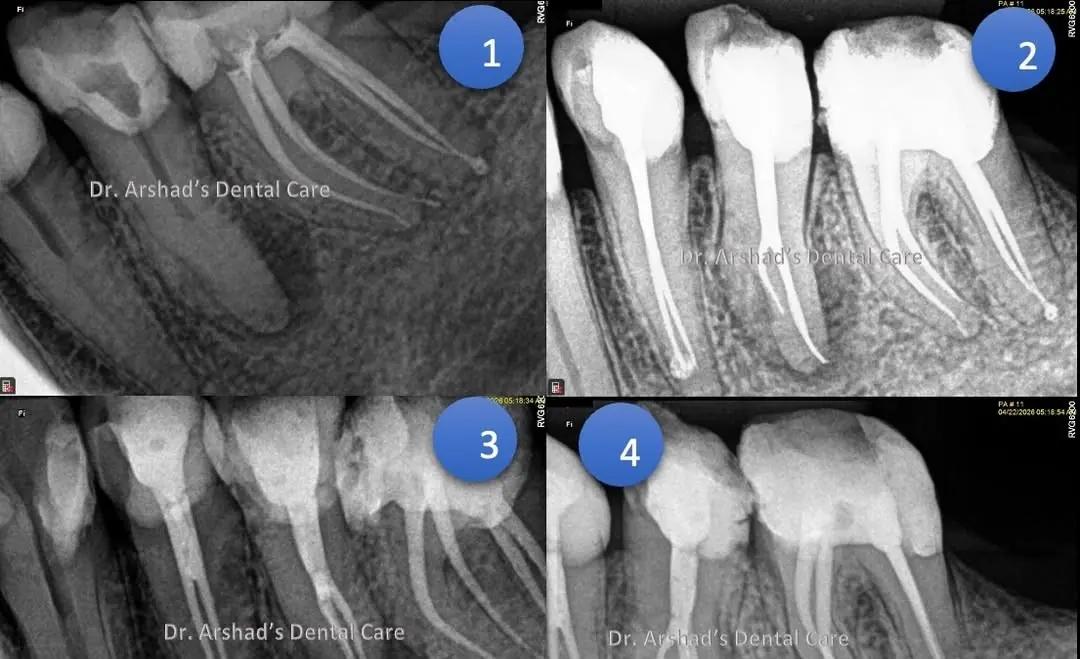
A very challenging case: a lower premolar that had three separate roots, a Vertucci type VIII. Cases like this cannot be done without a microscope. The main trunk divided into three branches deep inside, which made shaping and filling the canals very hard.
This is the case the equipment exists for. It is not typical, and it is not the reason most people come, but it is the ceiling of what the room can do.
Keep the tooth, or replace it.
The alternative, with its real numbers.
What we do to keep it painless
It should not hurt, and that is a method too.
- Every patient
A light touch
Empathy with the patient, and constantly engaging the patient in talking.
- An anxious patient
Unhurried, and reassured
Constant reassurance, a relaxing atmosphere, and a relaxed approach.
Nine in ten root canals here are finished in a single visit. Cases that arrive with infection, and some re-treatments, need an antibiotic dressing left in the canals for fourteen days: that is two visits.
Which is the other half of the answer: the shortest way to keep a root canal painless is to not need four appointments for it.
Monday-Thursday & Saturday · 4:00-8:00 PM
Common questions
Fifteen questions, answered properly.
Asked most often
Will the procedure hurt?
After local anaesthesia there will be no discomfort. However, if you continue to feel unbearable pain we will either provide more anaesthesia or discontinue the procedure.
Asked most often
Can a root canal be done in a single visit?
Nine in ten are. Rotary instruments made it possible to prepare root canals safely over fewer visits, and in about 90% of cases in a single visit. Cases that arrive with infection, and some failed root canals being re-treated, are done over more than one visit, those need an antibiotic dressing left in the canals for fourteen days.
Asked most often
How much does a root canal cost in Karachi?
Across private practice in Karachi the range is roughly PKR 25,000 to 60,000, depending on the tooth and on who is doing it. At this clinic a root canal is PKR 48,000. Re-treating a root canal that has already failed elsewhere is PKR 55,000, because it takes more visits, more specialised equipment and more material.
01I do not have pain in my tooth. Why are you suggesting a root canal?
The dental pulp can undergo death without pain. Such teeth, if they require a filling, cannot be treated unless a root canal is done. It is like closing a lid on a steaming pressure cooker, it will cause immense pain if the tooth is not treated by a root canal.
02My last root canal failed. Will this one fail too?
Root canal failures usually happen when the procedure is performed without proper isolation and magnification. If the operator does not have enough training and proper equipment, mistakes can happen that result in failure.
03Can you just fill the tooth and avoid a root canal?
If the dental pulp is either dead, or if it gets exposed during removal of decay, a root canal is indicated. In young individuals, under certain conditions, a procedure called vital pulp therapy can be performed instead for an exposed pulp.
04Why do I have so many cavities when I do not eat a sweet and sugary diet?
Dental decay is a combination of four things: bacteria that consume carbohydrates, on a tooth surface, for a sufficient amount of time. Decay is also slow, and takes up to four years to show as a large cavity, so you may have given up sugar a year ago and the decay had already started. Carbohydrates are also present in a modern diet without us knowing, and the frequency of consumption does more damage than a large quantity at one time.
05What is a root canal treatment?
A root canal treats the diseased, painful or dead pulp inside a tooth. The pulp is the tissue that senses hot and cold and nourishes the tooth. The disease is caused by dental decay carrying bacteria from the mouth into the pulp. If treatment is delayed, the diseased pulp either causes a great deal of pain, or it dies and causes infection.
06How do I know if I need a root canal?
The usual signs are pain, or sensitivity to hot and cold that lingers. But a tooth can also need one with no pain at all: the pulp can die quietly, and a tooth in that state cannot simply be filled. It is like closing a lid on a steaming pressure cooker, it will cause immense pain later if it is not treated properly now.
07How successful is a root canal, and how long will the tooth last?
The success rate is 95 to 100%. If the tooth already has infection in it that falls to about 85 to 90%, which does not reduce how worthwhile the procedure is. Those figures are for periods exceeding ten years.
08Should I have a root canal or just have the tooth taken out?
A root canal keeps your own tooth, and at 95 to 100% success over ten years and beyond it usually keeps it in function indefinitely. Replacing an extracted tooth is a bigger undertaking: a dental implant with a crown starts at PKR 170,000 against PKR 48,000 for the root canal, and takes at least three months for the bone to grow around the implant. Extraction is the right answer when a tooth genuinely cannot be saved, not as a shortcut.
09Why do root canals fail?
Failures usually happen when the procedure is done without proper isolation and magnification. If bacteria are still present in the canals when the root canal is completed, it will fail. Moisture during filling causes the filling to fail. And a dentist working without a rubber dam cannot use the strong disinfectants that clean the inside of the tooth, because they taste extremely bad, which is exactly why root canals done without one fail more often. Beyond that, an operator without enough training or the right equipment can make mistakes that cause a failure.
10Why is a rubber dam used for a root canal?
It gives complete isolation of the tooth. The bacteria in saliva, and the moisture itself, do not get inside the tooth, we are already fighting the bacteria in there and do not need more. It is also what makes strong disinfectants usable at all. In much of the developed world a root canal specialist can be sued for not using one.
11What difference does a dental microscope make?
In dentistry, vision is everything: you do more if you see more. Canals are not missed and decay can be removed completely. A microscope also lets a dentist go beyond routine procedures, because objects a fraction of a millimetre across are simply not visible to the naked eye. Magnification here runs up to 22 to 24 times, and unlike a loupe it can be varied and gives real depth perception, with a very bright light down into the tooth.
12What is rotary endodontics?
It was a revolution in endodontics when it arrived in the late 1990s. It reached Pakistan in the early 2000s and Prof. Dr. Arshad Hasan was one of the early adopters. Before it, root canals were prepared with manual instruments over several visits. Today rotary NiTi instruments are made to save teeth in a very conservative way, so patients keep them for longer.
Published work
Thirteen peer-reviewed papers by Prof. Dr. Arshad Hasan.
On root canals. Five of the thirteen are lead-author. Every entry links to its DOI.
- 012026An Animal Model of Pulpitis Based on an Outbred Mice Strain and Its Histological AnalysisJ. of Visualized Experiments (JOVE)Lead authorView DOI
- 022023A novel experimental model to investigate fungal involvement shows expression of Dectin‐1 in periapical lesion pathogenesisJournal of Oral RehabilitationLead authorView DOI
- 032023Investigating In Situ Expression of Neurotrophic Factors and Partner Proteins in Irreversible PulpitisJournal of EndodonticsView DOI
- 042023Exploring the Most Effective Apical Seal for Contemporary Bioceramic and Conventional Endodontic Sealers Using Three Obturation TechniquesMedicinaView DOI
- 052022Gene expression analysis of toll like receptor 2 and 4, Dectin-1, Osteopontin and inflammatory cytokines in human dental pulp ex-vivoBMC Oral HealthLead authorView DOI
- 062022Expression of Toll-like receptor 2, Dectin-1, and Osteopontin in murine model of pulpitisClinical Oral InvestigationsLead authorView DOI
- 072022Association between maternal chronic apical periodontitis (CAP) and low birth weight preterm birth (LBWPT)J. Pakistan Medical AssocView DOI
- 082021Outcome Of Endodontic Procedures Performed By Dental Interns Using Stainless Steel And Niti Files: A 10- Year Retrospective Study.J. Ayub Med Coll AbbottabadLead authorView DOI
- 092021Access Cavity Preparations: Classification and Literature Review of Traditional and Minimally Invasive Endodontic Access Cavity DesignsJournal of EndodonticsView DOI
- 102021Effect of Natural and Artificial Dentin Conditioners on the Release of Vascular Endothelial Growth FactorJournal of EndodonticsView DOI
- 112020Erosive Potential of 1% Phytic Acid on Radicular Dentine at Different Time IntervalsEuropean Endodontic JournalView DOI
- 122020CHARACTERISTICS OF POST-NATAL PAKISTANI WOMEN WITH CHRONIC APICAL PERIODONITITISJ. Medical Sciences (Peshawar)View DOI
- 132019Comparison of Post Instrumentation Pain Score in Irreversible Pulpitis with Occlusal Reduction Versus No Occlusal ReductionJ. Pakistan Dental AssocView DOI
Start with the X-ray, decide afterwards.
Examination, X-ray and diagnosis on the screen in front of you. The case is discussed, and you accept it or you don't.
Monday-Thursday & Saturday · 4:00-8:00 PM. Office 101, First Floor, Plot 21-C/5, Al Murtaza Commercial Area, DHA Phase 8, Karachi 75500.
Elsewhere
Where else his work shows up.
Workshops, talks, published work and the procedure videos, on the sites that carried them. Every link opens where it was published.
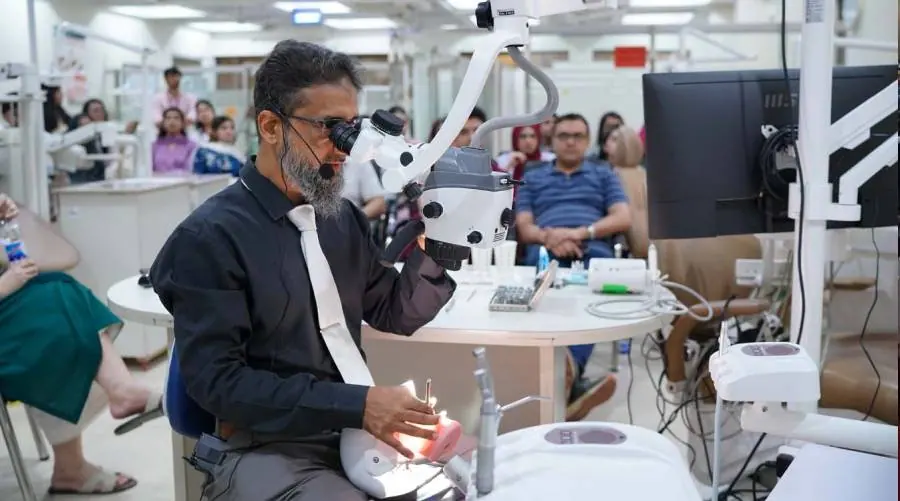 DentalNews.pk
Two-day workshop series on microscope-assisted endodontics, Lahore
Sept 2026
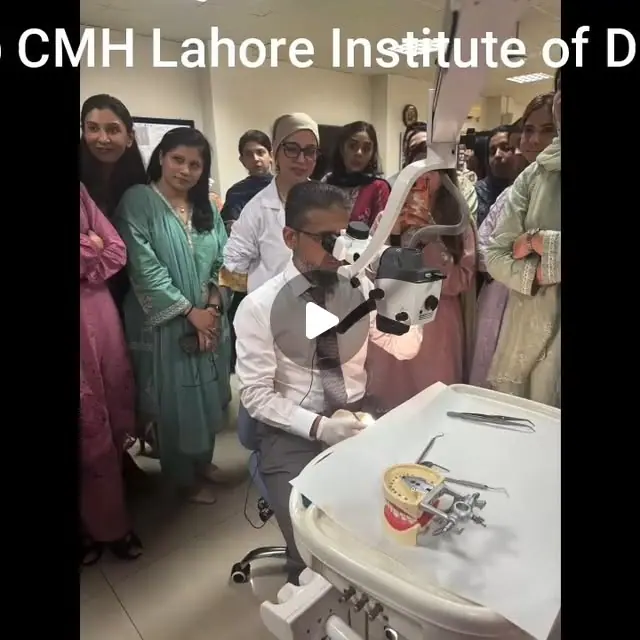 Instagram
Procedure videos and cases, in short form
Sept 2026
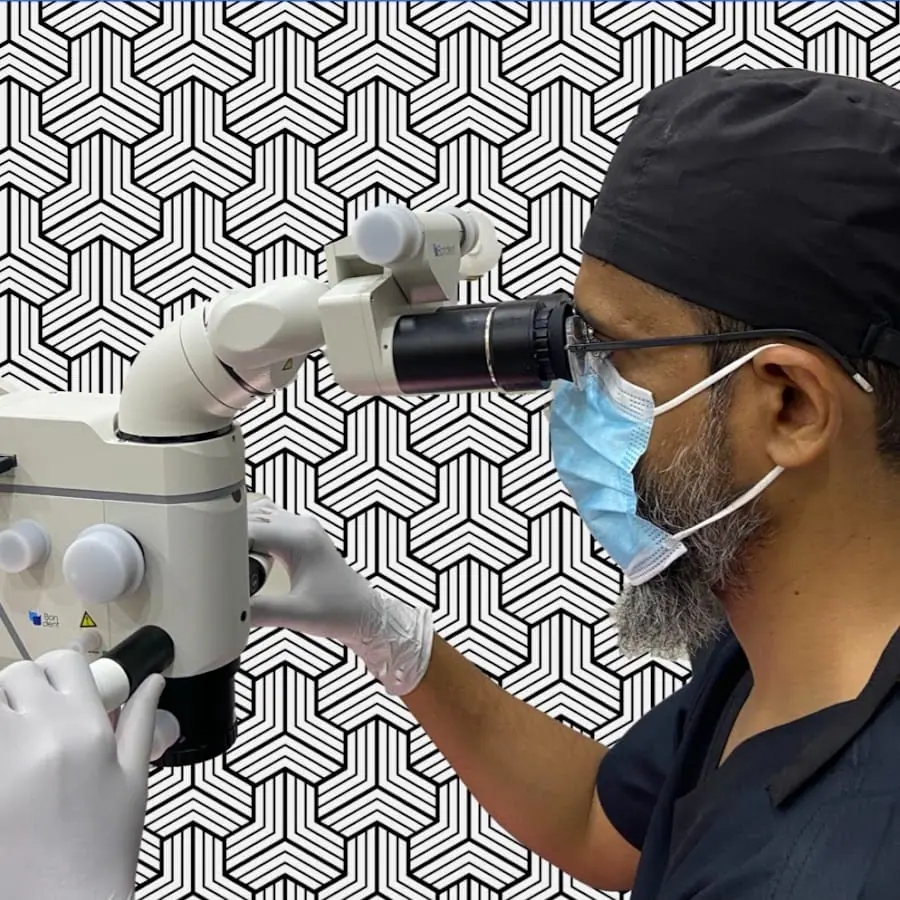 YouTube
26 procedure vlogs, with Urdu commentary
Jan 2026
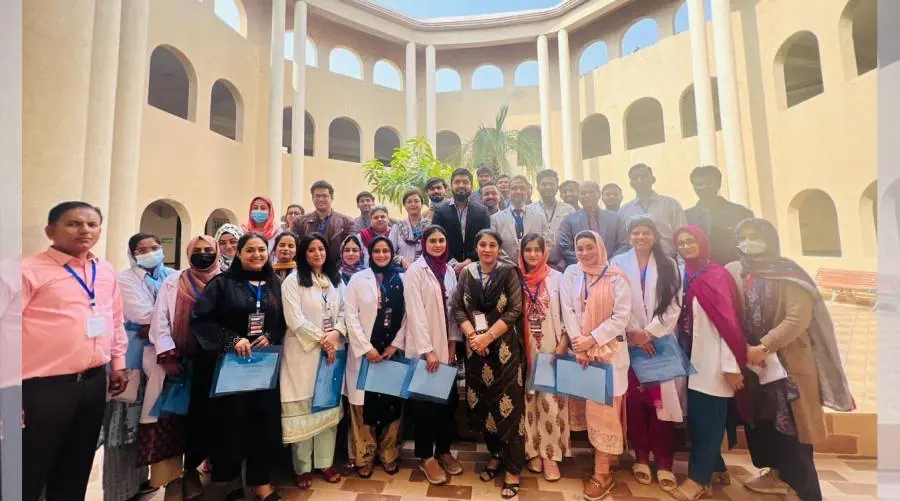 DentalNews.pk
Separated instrument retrieval workshop at LUMHS
Dec 2025
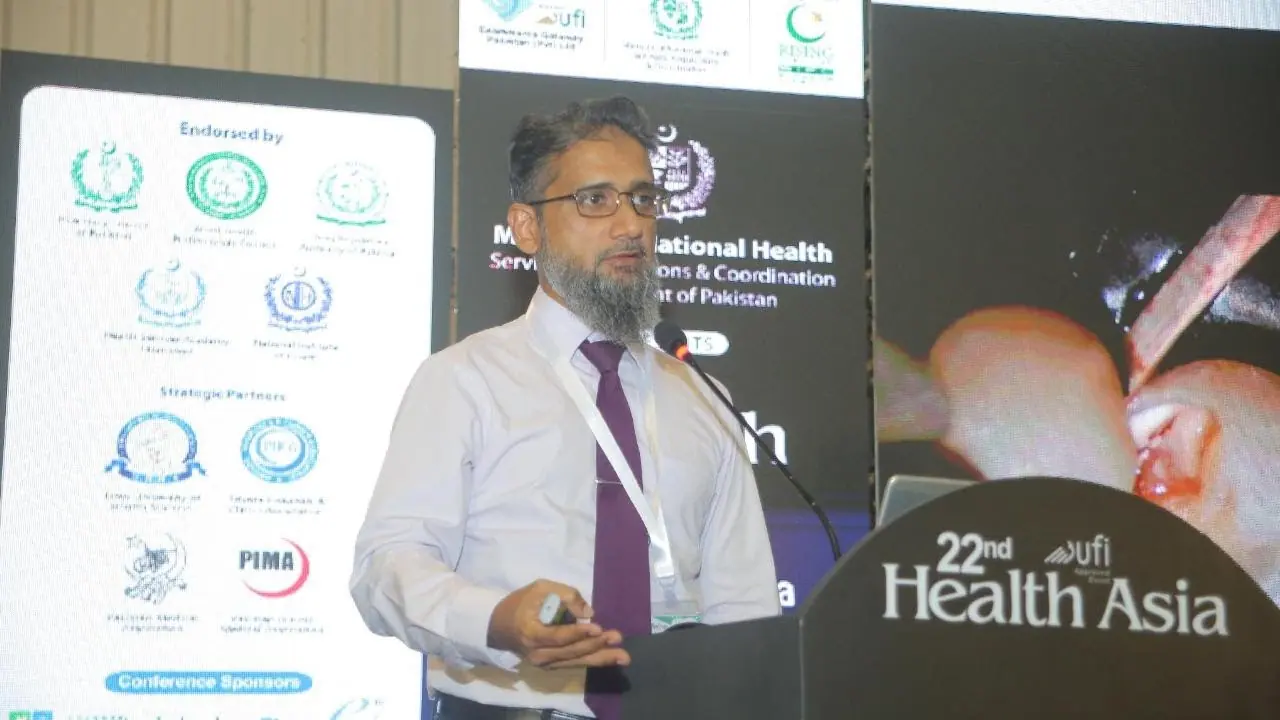 YouTube
Microscope Enhanced Restorative Dentistry, Dentech Asia, Karachi
Oct 2025
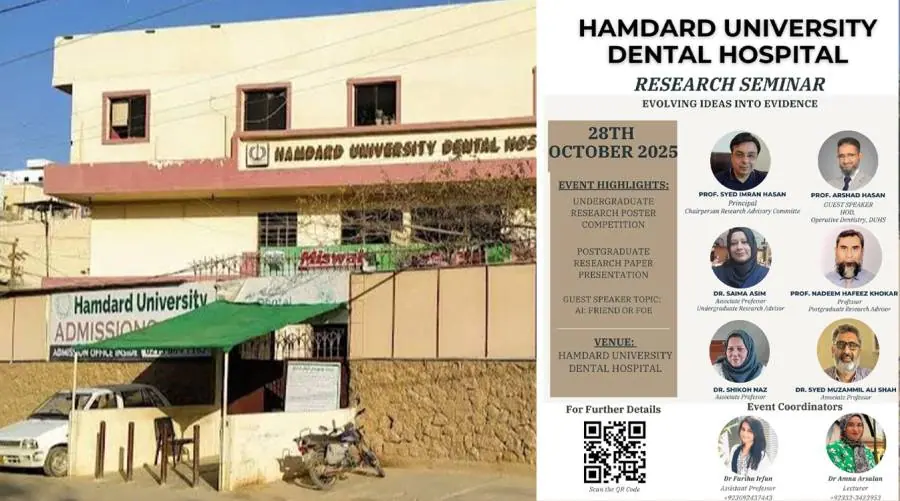 DentalNews.pk
Hamdard University Dental Hospital research seminar
Oct 2025
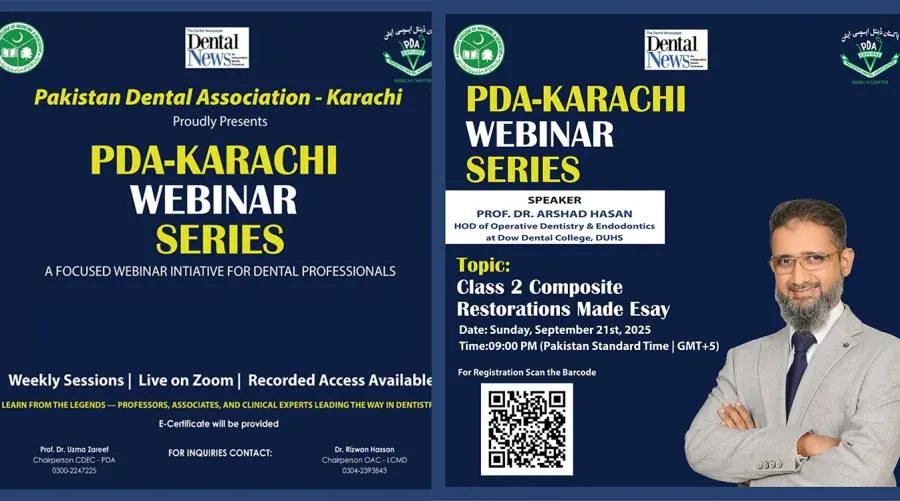 DentalNews.pk
PDA Karachi second webinar with Prof. Dr. Arshad Hasan
Sept 2025
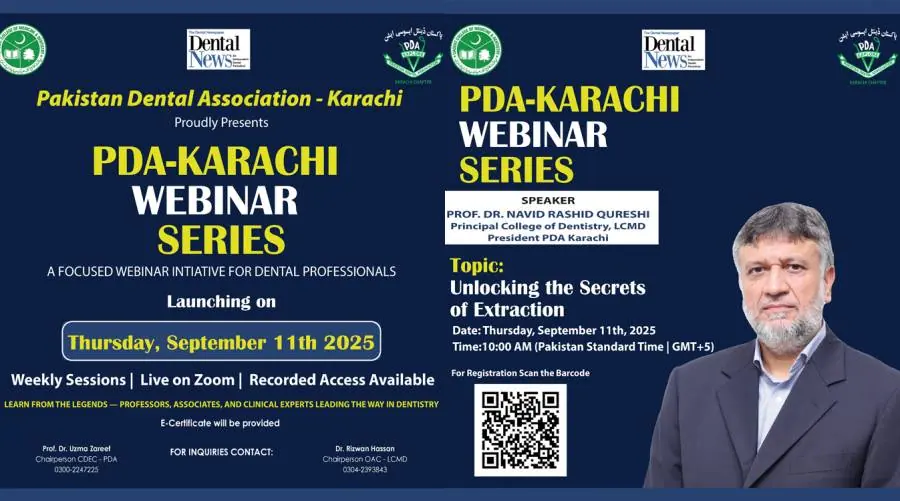 DentalNews.pk
PDA Karachi webinar series 2025
Sept 2025
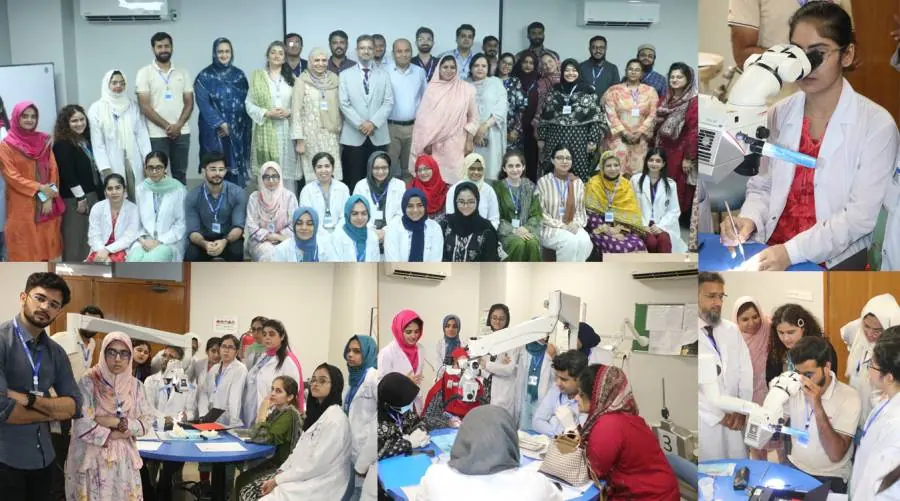 DentalNews.pk
Hands-on workshop at Dow Dental College on file removal
Jun 2025
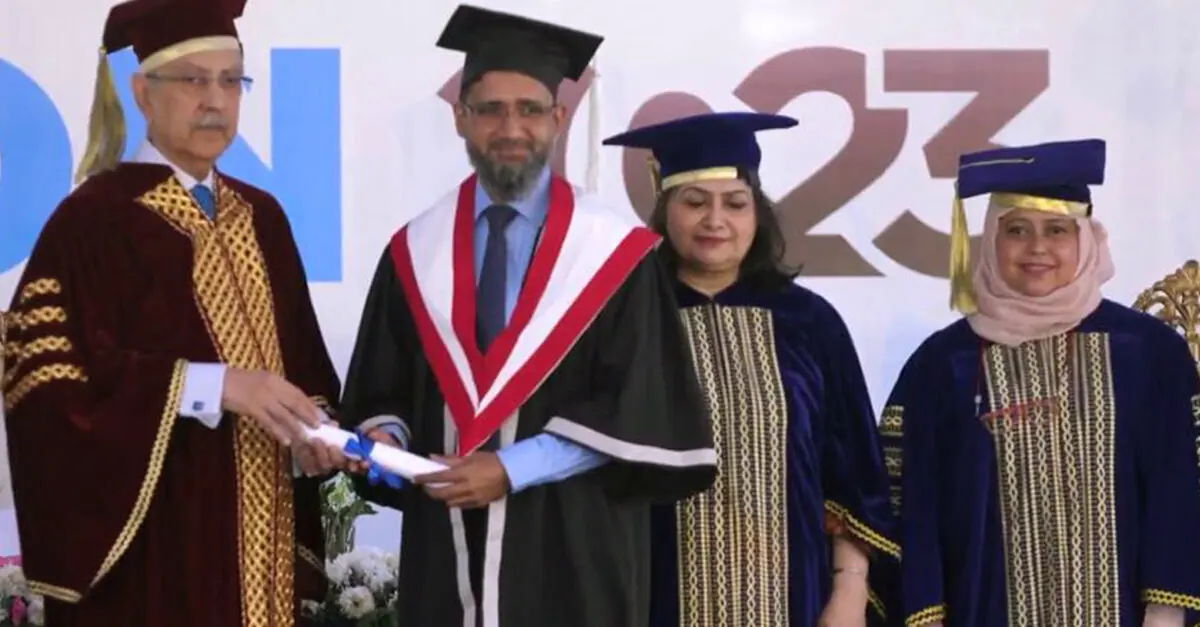 Dental Tribune
Prof. Dr. Arshad Hasan receives PhD in Operative Dentistry
Dec 2023